Blogia

Vanity Fea

Churchill on Gaza

lunes, 25 de agosto de 2014

Churchill on Gaza

A passage from David Lane's Contemporary British Drama (Edinburgh UP, 2010), describing a recent short play by British dramatist Caryl Churchill:

Her final salvo of the decade was the provocatively one-sided ten-minute play Seven Jewish Children: a play for Gaza (2009), a response to Israel's retaliation against intensive bombing from the Islamist terror organization Hamas after Christmas 2008. An unspecified number of Jewish adults (nine in the Royal Court production) gather in seven tightly written scenes to debate what they should tell a young girl about Israel's history. Each scene is located during a significant historical moment, stretching from pre-Holocaust Germany, through to the Six-Day War in 1967 and finally Gaza in 2009. Charting the rise of a nation from the persecuted to the aggressor, the dialogue is comprised as a list of statements rife with internal conflict over honesty versus the need to protect:

Tell her it's a game
Tell her it's serious
But don't frighten her
Don't tell her they'll kill her
Tell her it's important to be quiet
Tell her she'll have cake if she's good
Tell her to curl up as if she's in bed
But not to sing. (49)


Each section continues with the same pattern of conflict until the last, when there is a barrage of statements celebrating Israel's right to be among other things 'better haters' and 'chosen people', though still culminating with the contradictory line 'Don't tell her that.' The play uses a concise and intelligent structure to externalise the troubled internal dialogue of a Jewish nation. It dramatises the awkward task of bequeathing a nation's history to its children, but reconciling it with a desire to protect them from lies and fear.

The play attracted accusations of anti-Semitism from the Jewish press, one national broadsheet and two evening tabloids for its 'ludicrous and utterly predictable lack of even-handedness' (50). Churchill and director Dominic Cooke had written and directed a play 'critical of, and entirely populated by, characters from one community' and it was therefore indefensible regardless of its dramatic power, as neither of them were Jewish (51). What this criticism overlooks is the play's core structural dynamic: indecision. If a nation's historical identity is constructed upon reportage of past events, the perspective from which they are reported is crucial. This is the struggle the characters face. They are simultaneously heroes and villains. Their pride is at stake but they are aware of their own fallibility and therefore show a confused humility, rather than Machiavellian cunning. They are struggling to create a fixed version of history when history is perpetually fluid, terminally insecure and one sided. Churchill's portrayal of the Jewish people may have been critical, but it therefore comes with an understanding that they are only exercising part of an eternal and global human conundrum: 'we're just like everybody else and we're nothing like anybody else' (52). As a writer with an acute sense of what is means to suffer from the human condition, it is a fitting description for her most recent work.

_____

(49) Caryl Churchill, Seven Jewish Children (London: Nick hern Books, 2009), p. 1.
(50) Christopher Hart, Review of Seven Jewish Children by Caryl Churchill, The Sunday Times, 15 February 2009.
(51) John Nathan, Review of Seven Jewish Children by Caryl Churchill, Jewish Chronicle, 12 February 2009.
(52) Dominic Maxwell, Review of Seven Jewish Children by Caryl Churchill, The Times, 13 February 2009.
Caryl Churchill (Wikipedia)


Semiótica y hermenéutica del subgesto

lunes, 25 de agosto de 2014

Semiótica y hermenéutica del subgesto

Un artículo reciente, que ya va para viejo como yo; lo subo a un par de repositorios donde acumulo mis producciones.


_____. "Semiótica y hermenéutica del subgesto." Academia.edu 25 Aug. 2014.
    https://www.academia.edu/8073444/

_____. "Semiótica y hermenéutica del subgesto." ResearchGate 25 Aug. 2014.
    https://www.researchgate.net/publication/264992131

La isla vecina

lunes, 25 de agosto de 2014

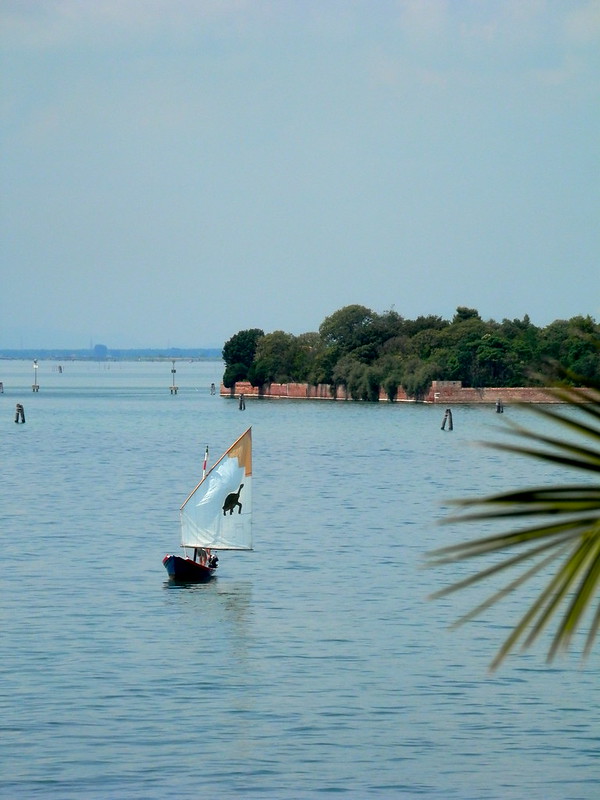
La isla vecina

La isla vecina

Sobre la parodia

domingo, 24 de agosto de 2014

Sobre la parodia

Hay quien me considera un experto en la parodia—aunque tiendo a especializarme en mi propio campo, la autoparodia. Sea como sea, aquí encontramos en eBookBrowse, sub "Parody", una bibliografía procedente de la mía:

Click here to download this file

Fui referencia mundial en Language & Linguistics

domingo, 24 de agosto de 2014

Fui referencia mundial en Language & Linguistics

Hablo en pasado atendiendo a eso de Borges cuando decía que los hombres pasan muertos la mayor parte de su existencia. Supongo que lo mismo les pasa a los enlaces en Internet. Pero a lo que voy, aparece mi bibliografía como referencia (única referencia española, me permito observarles a los catedráticos que tan arbitrariamente me suspendieron la última oposición) en las secciones de Lingüística de la Wikipedia.

Aquí en la Wikipedia for Schools, artículo "Linguistics": http://schools-wikipedia.org/wp/l/Linguistics.htm

La Wikipedia for Schools está revisada por especialistas en cada campo.

En el libro LINGUISTICS, edición impresa de la Wikipedia también me citan (aquí en Google Books). A ellos no.

En la sección lingüística de SOCIAL SCIENCES, en la edición impresa de la Wikipedia. Digo lo de la impresa porque esa también está acreditado que pasa por un filtro editorial—qué digo por uno, por muchísimos.

Y en LANGUAGE, edición impresa de la Wikipedia. Me citan en la página 44. No veo otros españoles por ahí—desde luego no a Martínez, ni a Garrudo, ni a esa peña del tribunal de cátedra.

Además aparece esta bibliografía (que ciertamente es de bíblicas proporciones) en los artículos de Lingüística y Filología de otras muchas wikipedias por todo el mundo, además de en los repositorios de recursos sobre filología, anglística, teoría literaria, etc., de numerosas universidades. Aquí hay una lista de enlaces pasados y presentes. Los futuros, si los hay, otro día nos ocupamos de ellos.


—oOo—


En la MLA y en Carolina Occidental


Citan mi bibliografía como ejemplo (no digo ejemplo a seguir, sino ejemplo de muestra) en la MLA Handbook for Writers of Research Papers, 7ª ed. (New York: Modern Language Association, 2009). Aparece esta referencia en la guía de documentación de la Universidad de Carolina Occidental.

MLA Research Documentation (Western Carolina U)
https://www.wcu.edu/Printable_MLA_version_FOR_WEB.pdf

El mismo ejemplo siguen en la Universidad de Bamberg. Busquen "Landa", acabamos antes que con "García". García debe ser el apellido más frecuente también en Carolina Occidental.

Entrada al manicomio acuático

domingo, 24 de agosto de 2014

Entrada al manicomio acuático


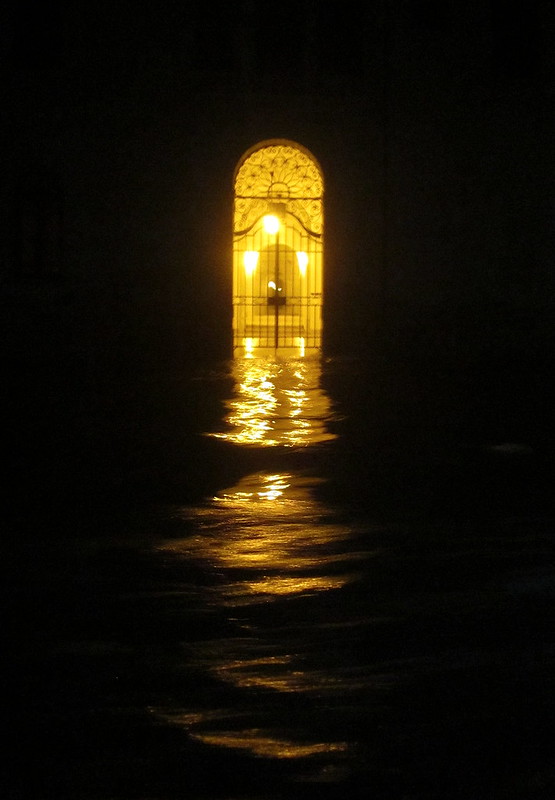
Desde la laguna de Venecia:

Entrada al manicomio acuático


—oOo— 
 

Characters in Fictional Worlds

sábado, 23 de agosto de 2014

Characters in Fictional Worlds

Me citan unos narratólogos alemanes en este libro de teoría de la literatura y de la ficción, sobre los personajes en mundos ficticios— citan mi bibliografía, como primer elemento en su propia lista bibliográfica.


Eder, Jens, Fotis Jannidis, and Ralf Schneider. Characters in Fictional Worlds: Understanding Imaginary Beings in Literature, Film and Other Media. (Revisionen, 3). Berlin: Walter de Gruyter, 2010. Online preview at Google Books: http://books.google.es/books?id=UZih8Zwh9I8C