Blogia

Vanity Fea

The Story Behind Any Story: The Paris Lecture


viernes, 8 de agosto de 2014

The Story behind any Story: The Paris Lecture


Sur les quais

The Story behind any Story:

The Paris Lecture

Reference Info: Lecture at the 3rd Conference of the European Narratology Network, Université Internationale de Paris, 28-30 March 2013


This paper/lecture is now online at the SSRN, and has been accepted by a number of thematic journals (Date posted: August 02, 2014).

http://papers.ssrn.com/abstract=2474591

eJournal Classifications
AARN Subject Matter eJournals


AARN Subject Matter eJournals


CSN Subject Matter eJournals
    
        
CSN Subject Matter eJournals
    
        
CSN Subject Matter eJournals
    
        
CSN Subject Matter eJournals
    
        
CSN Subject Matter eJournals


PRN Subject Matter eJournals


Here a couple of videos from the CRAL's channel, with my lecture at the Université Internationale de Paris.

A longer paper based on the lecture will be published by the Amsterdam International Journal of Cultural Narratology some time in 2015.


____


The Paris lecture in Academia.


La mitad de la historia de todo 


—oOo—

Bibliografía sobre Christopher Marlowe


viernes, 8 de agosto de 2014

Bibliografía de Christopher Marlowe

Bibliography of Literary Theory, Criticism and Philology - Universidad de Zaragoza


Mi último artículo sobre Marlowe

Visto en una mesa

viernes, 8 de agosto de 2014

Visto en una mesa

Visto en una mesa

Hériter du structuralisme?

jueves, 7 de agosto de 2014

Hériter du structuralisme? (VIDÉO)

Table ronde avec A. Simon, C. Calame, J. Leenhardt, R. Bellour, M. Macé
Autour de Roland Barthes, parrain imaginaire du CRAL


La journée des 30 ans du CRAL s'est tenu le 28 novembre 2013 à l'EHESS, Paris.

« Avec les choses intellectuelles, nous faisons à la fois de la théorie, du combat critique et du plaisir », affirmait Barthes en 1975. Prolongeons cet élan en fêtant les 30 ans du CRAL (CNRS-EHESS), créé en 1983 à la suite de la mort de Barthes, par Raymond Bellour, Claude Bremond, Hubert Damisch, Gérard Genette, Louis Marin, Christian Metz et Tzvetan Todorov.

Depuis 30 ans, les membres du Centre de recherches sur les arts et le langage travaillent à une compréhension des arts, des conduites esthétiques et des faits de culture, en alliant l'analyse des œuvres à l'étude de leurs enjeux anthropologiques, sociaux et historiques. Le CRAL s'est toujours trouvé aux avant-postes de la recherche sur les arts et leurs pratiques. D'abord rassemblés autour de références communes (Saussure, les formalistes russes), ses chercheurs ont su en permanence intégrer de nouvelles dimensions et de nouvelles approches : l'apport de la psychanalyse, l'ouverture à l'esthétique générale, les enjeux éthiques et politiques, les sciences cognitives.

Le 28 novembre, nous souhaitons ouvrir une réflexion sur cet héritage, sur cette évolution et sur les cadres actuels de notre travail. Ces journées seront organisées autour de 4 tables rondes, centrées sur l'un des inspirateurs ou fondateurs du CRAL, ouvrant des questions qui nous engagent tous.

Avec la participation de : E. Buch, A. Simon, C. Calame, J. Leenhardt, R. Bellour, M. Macé, G. Careri, L. Jurgenson, L. Acquarelli, G. Fuk, G. Didi-Huberman, J.-M. Schaeffer, J. Pier, N. Heinich, B. Carnevali, C. Benand.

¿Quién define la realidad?

jueves, 7 de agosto de 2014

¿Quién define la realidad?

La realidad la hacemos un poco entre todos, y cada cual habita en parte en la suya y en parte en la de todos. Ahora, cuando llega la hora de definir cuál es la naturaleza última de la realidad (por ejemplo ¿Hay Dios? ¿Cuida de nosotros? ¿Qué planes tiene? ¿Hay otra vida? ¿Vivimos en un ordenador? ¿Tenemos alma? ¿Tiene todo esto algún sentido? ¿Cuál es la sustancia y razón de lo que vemos? ¿A dónde vamos? ¿Nos llevan por buen camino?)—para todo esto, doctores tiene la Iglesia. Hacen falta expertos, toda una organización social para el Mantenimiento y Definición del Universo. De esta cuestión hablan algo Berger y Luckmann en su libro sobre The Social Construction of Reality. Veamos unos párrafos sobre estos Expertos Universales, dedicados a la teoría pura y a la legitimación de la realidad:

Because the universal experts operate on a level of considerable abstraction from the vicissitudes of everyday life, both others and they themselves may conclude that their theories have no relation whatever to the ongoing life of the society, but exist in a ort of Planotic heaven of ahistorical and asocial ideation. This is, of course, an illusion, but it can have great socio-historical potency, by virtue of the relationship between the reality-defining and the reality-producing process. (135)


Se refieren Berger y Luckmann, entre otras cosas, a que la representación de la realidad (la definición de la realidad y la teorización sobre ella se cuentan entre las más influyentes formas de representación) también modela la realidad social, y proporciona mapas y modelos de la realidad que orientan la acción sobre la realidad así como otras representaciones de la realidad.

    A second consequence is a strengthening of traditionalism in the institutionalized actions thus legitimated, that is, a strengthening of the inherent tendency of institutionalization towards inertia. (....)
   The emergence of full-time personnel for universe-maintaining legitimation also brings with it occasions for social conflict. Some of this conflict is between experts and practitioners. The latter, for reasons that need not be belaboured, may come to resent the experts' grandiose pretensions and the concrete social privileges that accompany them. What is likely to be particularly galling is the experts' claim to know the ultimate significance of the practitioners' activity better than the practitioners themselves. (....)
    This brings us to another, equally important, possibility of conflict—that between rival coteries of experts. (135-6)


¿Y cómo se han de resolver los conflictos entre doctrinas, en particular cuando se resuelven a cuestiones transcendentales, teológicas o metafísicas, que escapan a la experiencia común? Puede utilizarse la argumentación, y se usa abundantemente, pero no es eso lo que decide el triunfo de las doctrinas. Berger y Luckmann son pragmáticos desilusionados en este sentido: es el ejercicio del poder, del control y de la autoridad política lo que decide la resolución de las disputas sobre la naturaleza de la realidad, al menos en el espacio público—(y apuntemos que el espacio privado se construye en gran medida por interiorización del espacio público). Son las legitimaciones toleradas o promovidas por el poder las que acaban definiendo la naturaleza de la realidad. Al menos la realidad públicamente reconocida:

By its very nature such argumentation does not carry the inherent conviction of pragmatic success. What is convincing to a man may not be to another. We cannot really blame such theoreticians if they resort to various sturdier supports for the frail power of mere argument—such as, say, getting the authorities to employ armed might to enforce one argument against its competitors. In other words, definitions of reality may be enforced by the police. This, incidentally, need not mean that such definitions will remain less convincing than those accepted 'voluntarily'—power in society includes the power to determine decisive socialization processes and, therefore, the power to produce reality. In any case, highly abstract symbolizations (that is, theories greatly removed from the concrete experience of everyday life) are validated by social rather than empirical support. It is possible to say that in this manner a pseudo-pragmatism is reintroduced. The theories may again be said to be convincing because they work— work, that is, in the sense of having become standard, taken-for-granted knowledge in the society in question. (137)


Con esta cuestión de las definiciones oficiales de la realidad, y su cuestionamiento marginal, estaba relacionado mi artículo sobre el Evangelio de Judas—un libro que cuestiona la definición de la realidad de la ideología cristiana mayoritaria de su tiempo.


Bibliografía de Platón

jueves, 7 de agosto de 2014

Bibliografía de Platón

Procedente de mi bibliografía http://bit.ly/abiblio,  y paseada por Google y otros sitios antes, reinserto aquí una bibliografía de Platón, considerado en tanto que teorizador de la literatura y la representación, mayormente:


from A Bibliography of Literary Theory, Criticism and Philology http

View more ebooks on Vifon.net


Y aquí hay otra bibliografía de Simone de Beauvoir—la fecha de 1970 es por cierto errónea, no oiría yo hablar de Simone de Beauvoir hasta diez años después.


—oOo—


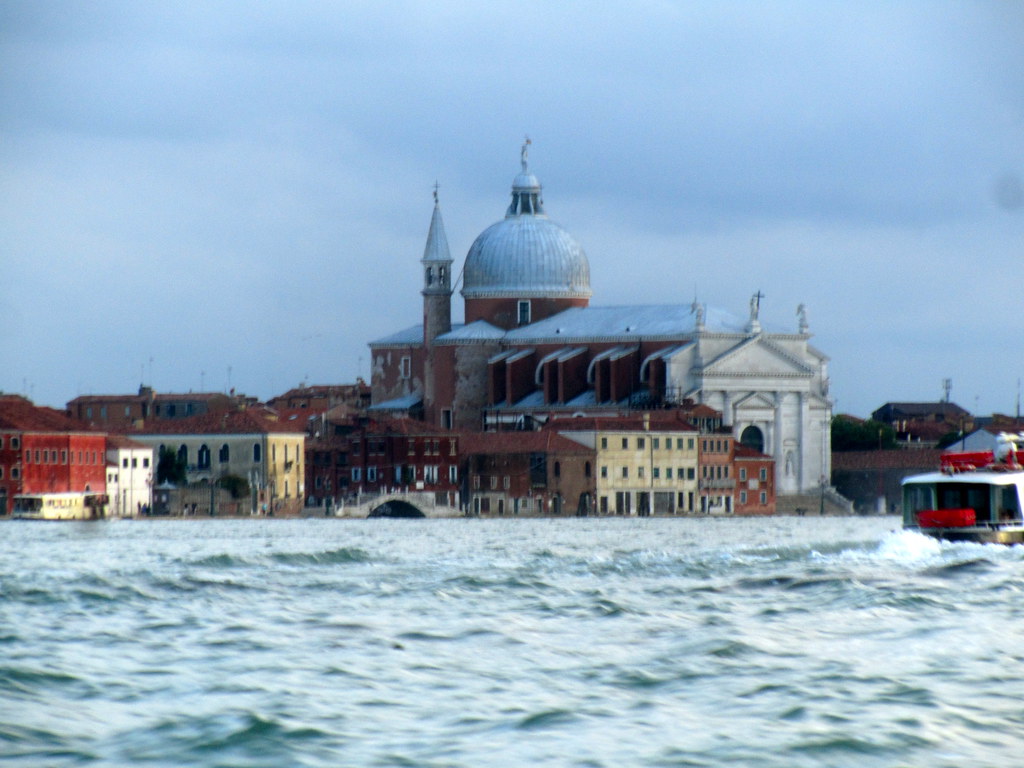
Venecia a ras de mar

jueves, 7 de agosto de 2014

Venecia a ras de mar

Sigo poniendo fotos de nuestra excursión a Venecia, a pesar de la mala conexión que tengo. ¡Paciencia! Que son muchos cientos.

Venecia a ras de mar


—oOo—

Gilgamesh y la escritura

miércoles, 6 de agosto de 2014

Gilgamesh y la escritura

Este artículo interpreta el antiguo poema épico mesopotámico de Gilgamesh, la narración literaria más antigua del mundo. La temática de la búsqueda de la inmortalidad en el poema se examina en su relación con los elementos del mismo relativos a la escritura, y a la permanencia de los edificios (hechos de los mismos materiales que los antiguos textos sumerios). 'Gilgamesh' es, en cierto modo, la épica de la escritura, transcendiendo a la muerte y celebrándose a sí misma.  Enfatizamos por tanto una dimensión reflexiva del poema.