Una replicación de la actividad neuronal entre el hablante y el oyente subyace a la comunicación efectiva, según este abstract que nos pasa Norman Holland. Y se interrumpe cuando no hay comunicación.
Joseph Henry Laboratories of Physics, Princeton University, Princeton, NJ 08544.
Abstract
Verbal communication is a joint activity; however, speech production and comprehension have primarily been analyzed as independent processes within the boundaries of individual brains. Here, we applied fMRI to record brain activity from both speakers and listeners during natural verbal communication. We used the speaker's spatiotemporal brain activity to model listeners' brain activity and found that the speaker's activity is spatially and temporally coupled with the listener's activity. This coupling vanishes when participants fail to communicate. Moreover, though on average the listener's brain activity mirrors the speaker's activity with a delay, we also find areas that exhibit predictive anticipatory responses. We connected the extent of neural coupling to a quantitative measure of story comprehension and find that the greater the anticipatory speaker-listener coupling, the greater the understanding. We argue that the observed alignment of production- and comprehension-based processes serves as a mechanism by which brains convey information.
PMID: 20660768 [PubMed - as supplied by publisher]
Helen E. Fisher, PhD biological anthropologist, is a Research Professor in the Department of Anthropology at Rutgers University. She has written five books on the evolution and future of human sexuality, monogamy, adultery and divorce, gender differences in the brain, the chemistry of romantic love, and most recently, human personality types and why we fall in love with one person rather than another.
Fisher maintains that humans have evolved three core brain systems for mating and reproduction:
Lust: the sex drive or libido
Romantic attraction: romantic love
Attachment: deep feelings of union with a long term partner.
"Love can start off with any of these three feelings," Fisher maintains. "Some people have sex first and then fall in love. Some fall head over heels in love, then climb into bed. Some feel deeply attached to someone they have known for months or years; then circumstances change, they fall madly in love and have sex." But the sex drive evolved to encourage you to seek a range of partners; romantic love evolved to enable you to focus your mating energy on just one at a time; and attachment evolved to enable you to feel deep union to this person long enough to rear your infants as a team.
But these brain systems can be tricky. Having sex, Fisher says, can drive up dopamine in the brain and push you over the threshold toward falling in love. And with orgasm, you experience a flood of oxytocin and vasopressin--giving you feelings of attachment. "Casual sex isn't always casual" Fisher reports, "it can trigger a host of powerful feelings." In fact, Fisher believes that men and women often engage in "hooking up" to unconsciously trigger these feelings of romance and attachment.
What happens when you fall in love? Fisher says it begins when someone takes on "special meaning." "The world has a new center," Fisher says, "then you focus on him or her. You beloved's car is different from every other car in the parking lot, for example. People can list what they don't like about their sweetheart, but they sweep these things aside and focus on what they adore. Intense energy, elation, mood swings, emotional dependence, separation anxiety, possessiveness, a pounding heart and craving are all central to this madness. But most important is obsessive thinking." As Fisher says, "Someone is camping in your head."
Fisher and her colleagues have put 49 people into a brain scanner (fMRI) to study the brain circuitry of romantic love: 17 had just fallen madly in love; 15 had just been dumped; 17 reported they were still in love after an average of 21 years of marriage. One of her central ideas is that romantic love is a drive stronger than the sex drive. As she says, "After all, if you causally ask someone to go to bed with you and they refuse, you don't slip into a depression, or commit suicide or homicide; but around the world people suffer terribly from rejection in love."
Fisher also maintains that taking serotonin-enhancing antidepressants (SSRIs) can potentially dampen feelings of romantic love and attachment, as well as the sex drive.
Fisher has looked at marriage and divorce in 58 societies, adultery in 42 cultures, patterns of monogamy and desertion in birds and mammals, and gender differences in the brain and behavior. In her newest work, she reports on four biologically-based personality types, and using data on 28,000 people collected on the dating site Chemistry.com, she explores who you are and why you are chemically drawn to some types more than others.
En este vídeo sobre "The Brain in Love" explica Fisher ese puntito clave en el centro del cerebro—en la parte más central, reptiliana y primitiva del cerebro. Así como otros sistemas cerebrales asociados con el amor:
Merecerían investigarse, por cierto, las conexiones entre esa actividad cerebral y otras asociadas a los sentimientos de suspense y narratividad—que también van ligados, nos dicen, a la segregación de dopamina.
Naturalmente, es una manera de decirlo. Todos trabajan a hombros de gigantes, o también de enanos, y en el caso de Venter incluyendo sus propios hombros, claro. Por otra parte, hay que aclarar que no ha creado nada de la nada, ni de una colección de frascos con productos químicos, sino que ha partido de un genoma natural para insertarlo en una célula también natural....—pero no le quitaré yo mérito a Venter ni a este primer "ser vivo artificial". Es un paso más en la tecnología de la manipulación genética, podría decirse, y el genoma diseñado es un texto cortito... pero tiene un valor simbólico, digamos que inaugural.
Diría que tiene un valor simbólico por lo mediático, si no fuese porque en este planeta de primates inconscientes esta noticia ocupa mucho menos espacio mediático que un seleccionador de fúbol recitando solemnemente la próxima alineación de su equipo. Aquí insertaría un párrafo diciendo las ganas de vomitar que da todo esto, pero hoy yo también me paso a los textos cortos.
Como con todos los grandes inventos, se abren posibilidades sólo imaginadas o calibradas hasta ahora por los escritores de ciencia ficción—Wells y su Isla del Doctor Moreau, Stapledon con sus Últimos y Primeros Hombres, James Blish con sus historias sobre pantropías y especies humanas artificiales—y otros. Los promotores de este proyecto, cómo no, hablan de aplicaciones médicas, industriales, ecologistas... Pero al conocer y manipular la estructura de la materia se dio lugar a la energía atómica, que también tiene múltiples aplicaciones, entre ellas las bombas que en algún momento de la historia futura exterminarán a miles de millones de personas. Del mismo modo, de este invento saldrán armas bacteriológicas, y también armas de defensa contra ellas. Saldrán bienes, y también seguramente horrores que apenas imaginamos.
Y saldrán en un futuro animales y plantas de diseño, y seres humanos de diseño. Entre ellos, probablemente, la especie (o especies) que sustituirá a la nuestra como depredador-organizador del planeta—el hombre diseñado, que tendrá en común con nosotros lo que nosotros tenemos en común con las otras doce especies de humanos extintos—gran parte del genoma, pero pocos intereses, gustos y prioridades. Todo está por ver y por hacer aún, pero con este paso el mundo es un poquito más posthumano.
The end of our universe, but far short of forever.... "When Will Time End?" —An interesting video on temporal cycles, the history of time, and a glimpse through the LHC into the universe beyond the observable universe.
—and a companion piece, "How Large is the Universe?":
Interesante noticia sobre las neuronas espejo pasa Norman Holland a Psyart. Cortopego y comento:
UCLA Researchers Make First Direct Recording Of Mirror Neurons In Human Brain
Such cells appear to have wider distribution than previously thought
Mirror neurons, many say, are what make us human.
They are the cells in the brain that fire not only when we perform a particular action but also when we watch someone else perform that same action.
Neuroscientists believe this "mirroring" is the mechanism by which we can "read" the minds of others and empathize with them. It's how we "feel" someone's pain, how we discern a grimace from a grin, a smirk from a smile.
Problem was, there was no proof that mirror neurons existed — only suspicion and indirect evidence. Now, reporting in the April edition of the journal Current Biology, Dr. Itzhak Fried, a UCLA professor of neurosurgery and of psychiatry and biobehavioral sciences, Roy Mukamel, a postdoctoral fellow in Fried's lab, and their colleagues have for the first time made a direct recording of mirror neurons in the human brain.
The researchers recorded both single cells and multiple-cell activity, not only in motor regions of the brain where mirror neurons were thought to exist but also in regions involved in vision and in memory.
Further, they showed that specific subsets of mirror cells increased their activity during the execution of an action but decreased their activity when an action was only being observed.
"We hypothesize that the decreased activity from the cells when observing an action may be to inhibit the observer from automatically performing that same action," said Mukamel, the study's lead author. "Furthermore, this subset of mirror neurons may help us distinguish the actions of other people from our own actions."
The researchers drew their data directly from the brains of 21 patients who were being treated at Ronald Reagan UCLA Medical Center for intractable epilepsy. The patients had been implanted with intracranial depth electrodes to identify seizure foci for potential surgical treatment. Electrode location was based solely on clinical criteria; the researchers, with the patients' consent, used the same electrodes to "piggyback" their research.
The experiment included three parts: facial expressions, grasping and a control experiment. Activity from a total of 1,177 neurons in the 21 patients was recorded as the patients both observed and performed grasping actions and facial gestures. In the observation phase, the patients observed various actions presented on a laptop computer. In the activity phase, the subjects were asked to perform an action based on a visually presented word. In the control task, the same words were presented and the patients were instructed not to execute the action.
The researchers found that the neurons fired or showed their greatest activity both when the individual performed a task and when they observed a task. The mirror neurons making the responses were located in the medial frontal cortex and medial temporal cortex, two neural systems where mirroring responses at the single-cell level had not been previously recorded, not even in monkeys.
This new finding demonstrates that mirror neurons are located in more areas of the human brain than previously thought. Given that different brain areas implement different functions — in this case, the medial frontal cortex for movement selection and the medial temporal cortex for memory — the finding also suggests that mirror neurons provide a complex and rich mirroring of the actions of other people.
Because mirror neurons fire both when an individual performs an action and when one watches another individual perform that same action, it's thought this "mirroring" is the neural mechanism by which the actions, intentions and emotions of other people can be automatically understood.
"The study suggests that the distribution of these unique cells linking the activity of the self with that of others is wider than previously believed," said Fried, the study's senior author and director of the UCLA Epilepsy Surgery Program.
"It's also suspected that dysfunction of these mirror cells might be involved in disorders such as autism, where the clinical signs can include difficulties with verbal and nonverbal communication, imitation and having empathy for others," Mukamel said. "So gaining a better understanding of the mirror neuron system might help devise strategies for treatment of this disorder."
Other authors on the study included Arne D. Ekstrom, Jonas Kaplan and Marco Iacoboni, all of UCLA. The project was supported by the National Center for Research Resources, a component of the National Institutes of Health (NIH). The authors report no conflict of interest. ________________________
Me parece especialmente interesante que se hayan encontrado neuronas espejo en más partes del cerebro humano de las que se pensaba antes: en especial las ligadas a la visión y a la memoria. Sin conocer el estudio original, poco se puede decir, pero habría que profundizar en las implicaciones de este hallazgo para entender la percepción mutua, y también la naturaleza de la memoria como experiencia virtual. Teniendo en cuenta, además, el bien conocido hecho de que los recuerdos son parcialmente reconstruidos o "inventados" por el cerebro acudiendo a procesos cognitivos habituales y asociaciones.
En cuanto a la visión, creo que las neuronas espejo no pueden sino tener un papel muy importante en el procesamiento de la mirada ajena.
"El ojo que ves no es ojo porque tú lo veas, es ojo porque te ve."
—Machado dixit. En este artículo sobre las neuronas espejo de Babel's Dawn (aunque el autor no estaba muy entusiasmado con la cuestión de las neuronas espejo) observaba yo que la experiencia de la mirada ajena, en especial de la mirada humana, ha llamado con frecuencia la atención de diversos observadores (no sólo la de Sartre, atrapado en la Mirada del Otro). Ver un par de ojos es una experiencia totalmente distinta de mirar cualquier otra figura. En el momento que procesamos una mancha, etc... como dos ojos, se produce un salto perceptual bien perceptible en nuestra experiencia del objeto visto. En mi opinión (pendiente de confirmación experimental) esto se debe a la acción de las neuronas espejo. Me felicito de ver que en efecto se puede medir su actuación en diversas interacciones de gesto y mirada, pero, insisto: —La experiencia perceptual de la mirada es distinta de cualquier otra experiencia que pueda desencadenarse con las neuronas espejo.
Y lo es, porque además del "espejo" habitual, se crea aquí un circuito reflexivo. La acción de "ver a alguien coger algo" activa determinadas neuronas espejo, OK. Pero la acción de "ver a alguien mirar algo" también lo hace —probablemente, pues esto todavía no está bien fundamentado en la literatura que conozco. "Ver a alguien mirar algo" puede parecer una acción un tanto indirecta, o de baja intensidad, pero no lo es tanto, en especial en una especie hipersocial como los humanos, donde la lectura de intenciones ajenas es tan crucial que hasta nos ha influido en el diseño del blanco de los ojos. Ver a alguien mirar algo es adivinarle las intenciones, o los deseos, o por lo menos tener algo adelantado en esa dirección. Aunque la dirección de la mirada pueda ser imprecisa, y el objeto mirado sea incierto, este objeto inmediatamente atrae nuestra mirada. Especialmente, ¿cuándo?
La respuesta es fácil. Especialmente cuando el objeto mirado somos nosotros mismos. Ahí no hay dudas ya sobre cuál pueda ser el objeto al que miran los ojos ajenos. Nuestros intereses sociales (o quizá nuestra integridad física como posibles presas) depende de la captación inmediata de esa mirada, por lo cual se trata de un mecanismo perceptual de primordial interés para su selección natural.
Y además se da la cuestión del cortocircuito reflexivo a que aludía antes. VER realizar una acción invita a recrearla "virtualmente" en las neuronas espejo de nuestro cerebro. Y a realizarla, por delegación o directamente. Ahora bien, VER realizar la acción de VER, más bien desencadena un feedback repentino entre dos sistemas cerebrales que ven y son vistos y se autoestimulan mutuamente a seguir viendo—de ahí en parte el horror a la mirada, y el reflejo también potente de apartar la mirada de otra mirada directa. Que quema como el sol. Light seeking light doth light of light beguile: So, ere you find where light in darkness lies, Your light grows dark by losing of your eyes. Study me how to please the eye indeed, By fixing it upon a fairer eye, Who dazzling so, that eye shall be his heed, And give him light that it was blinded by. Study is like the heaven's glorious sun, That will not be deep-search'd with saucy looks...
Estrenado ya, después de sus averías, el Gran Colisionador de Hadrones, los científicos brindan con champán y se felicitan de que no se creó ningún agujero negro ni ninguna reacción en cadena imparable. Aquí hay más información al respecto, con el comentario de los que se ríen de los agoreros.
Desde luego, es para felicitarse que (al menos en esta ocasión) no hayamos petado todo el planeta para avanzar unos cuantos currícula y proyectos de investigación.
Viene a ser como quienes, con los primeros experimentos con reacciones en cadena, se reían de quienes hablasen de la construcción de bombas atómicas, o de quienes temiesen que iba a volar por los aires la pila atómica. Estos científicos que desarrollaron la bomba atómica tampoco estaban construyendo ningún artefacto letal, eran gente de ecuaciones.
Que le cuenten esos chistes a los de Hiroshima, o a los de Nagasaki.
O a todos los que nos hemos criado en la guerra fría, con el mensaje (inaudito antes para la Humanidad) de que podíamos morir de modo súbito, nosotros y todo lo que conocíamos, en unos pocos segundos, quizá sin aviso previo.
Los arsenales atómicos allí siguen, "reducidos" (en sus cabezas obsoletas) por Obama y otros benefactores de la Humanidad. La espada de Damocles ésta no se irá—más bien se le irán sumando otras. A ver quien cree que el asunto éste de los hadrones no va a tener aplicaciones militares. Que levante la mano.
Así que sigan brindando, que corra el champán. Y enhorabuena por el currículum. Me atrevo a decir, por poco que entienda yo de colisiones de hadrones, que los que están llevando a cabo estos experimentos no conocen ni la milésima parte de lo que deberían conocer para estar manejando la energía que manejan, y jugando con los peligros hipotéticos que (quizá sólo quizá) se corren. Que vuele ya no la civilización, sino todo el planeta, por ejemplo. Eso sí sería un mérito histórico en cualquier currículum.
Así que muy contentos de que no se haya formado un big bang ni un agujero negro, satisfechos de que sus ecuaciones resultaron acertadas.... Canallas.
Virtualizando el mundo real, y llenándolo de información interactiva. Recomiendo no perderse esta charla de Pranav Mistry demostrando la tecnología SixthSense, que busca una mayor integración de gestos, cuerpo y experiencias reales y digitales. Es un vídeo más de los muchos interesantes que hay en TED (sobre temas muy diversos, todos de actualidad rabiosa, y muchos subtitulados en varios idiomas)—uno de mis sitios favoritos últimamente.

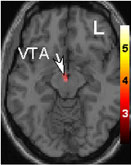 Fisher and her colleagues have put 49 people into a brain scanner (fMRI) to study the brain circuitry of romantic love: 17 had just fallen madly in love; 15 had just been dumped; 17 reported they were still in love after an average of 21 years of marriage. One of her central ideas is that romantic love is a drive stronger than the sex drive. As she says, "After all, if you causally ask someone to go to bed with you and they refuse, you don't slip into a depression, or commit suicide or homicide; but around the world people suffer terribly from rejection in love."
 igantes, o también de enanos, y en el caso de Venter incluyendo sus propios hombros, claro. Por otra parte, hay que aclarar que no ha creado nada de la nada, ni de una colección de frascos con productos químicos, sino que ha partido de un genoma natural para insertarlo en una célula también natural....—pero no le quitaré yo mérito a Venter ni a este primer "ser vivo artificial". Es un paso más en la tecnología de la manipulación genética, podría decirse, y el genoma diseñado es un texto cortito... pero tiene un valor simbólico, digamos que inaugural.

