
Retropost (2006): Bajo la lámpara del dentista
Bajo la lámpara del dentista
Publicado en Personales. com. José Ángel García Landa

...he pasado hoy varias horas, pero unas cuantas. Que, curiosamente, se me han hecho cortas, no largas, como sería de esperar. ¿Me estaré aficionando? ¿Volviéndome masoca? Mi dentista es muy bueno, ciertamente, pero nunca será para tanto. ¿O serían las drogas que me han dado? (Luego no se fiaban mucho de dejarme andar hasta casa solito...).
De momento no me apunto, como Martin Amis en Experience, o Nabokov en Speak, Memory, a la lista de quienes han descrito en detalle sus desventuras con los dentistas. Esperaré a tener más en común con ellos, aunque sólo sea más desastres.
—oOo—
Retropost (2006): Contencioso, sa
Contencioso, sa
Publicado en Cátedra. com. José Ángel García Landa
En febrero de 2003 me presenté, junto con otros tres candidatos, a una oposición de cátedras de Filología Inglesa. La plaza se declaró desierta, no pasando ninguno de los candidatos al segundo ejercicio. De los cuatro aspirantes, fui el único en recurrir la decisión de la comisión juzgadora; primero ante la propia comisión haciéndoles notar que los criterios que habían establecido no se atenían a derecho (por lo cual se me consideró insolente). Tras la prueba, envié numerosos escritos al Rector detallando las abundantes irregularidades cometidas. El Rector me recibió, intentó que retirase mis denuncias, y ante mi negativa me aseguró que todo sería investigado debidamente. De hecho me abrió un expediente investigador, que quedó en nada, cuando le dije que si la única manera de investigar el asunto era que me abriesen expediente, que adelante. Esta investigación no dejó huella documental que yo haya visto: nunca recibí una respuesta por escrito, y se me dio a entender que los escritos que había presentado no se consideraban recursos, sino denuncias, que el Rector podía oír o desoír. Se optó así por no contestar a ninguna de mis "denuncias" y por ignorar mis exigencias de una respuesta en regla. Ante el silencio administrativo del Rectorado, presenté (ya con abogado) un recurso donde ponía "esto es un recurso de alzada", y también este escrito quedó (esta vez ya previsiblemente) sin respuesta.
Con lo cual pasó el asunto a los tribunales, y presenté un contencioso administrativo. Tenemos juicio para el día 2 de julio de 2007. He estado examinando por primera vez el escrito del contencioso administrativo, redactado por mi abogada en lenguaje jurídico del que no podemos proferir el común de los mortales. Si hubiese contratado a la abogada ya desde el momento en que el tribunal cometió la primera irregularidad, otro gallo nos cantaría. Excuso colgar aquí el recurso, pero sí pondré las cuatro irregularidades básicas que se alegan. (Conste que muchas, muchísimas de las que yo le exponía al Rector en mis denuncias se han quedado por el camino y no han llegado a este escrito, por darle una forma manejable y no marear al juez).
Principales irregularidades, pues, según reza el escrito:
- Irregularidades en relación a la fijación del perfil de la plaza y la aplicación de éste por parte de la Comisión Juzgadora.
- Incumplimiento de lo dispuesto en el artículo 9.1 b) del Real Decreto 1.888/1984 de 26 de septiembre, por el que se regulan los Concursos para la provisión de Plazas de los Cuerpos Docentes Universitarios (modificado por el Real Decreto 1427/86 de 13 de junio) en relación con los artículos 10, 38 y 39 de la misma norma por cuanto la Comisión Juzgadora introduce la exigencia de un requisito no contemplado en la legislación vigente (presentación de proyecto investigador).
- Irregular composición de la Comisión Juzgadora.
- La Comisión Juzgadora introduce unos criterios de valoración en los que se prima antijurídicamente la docencia ante la actividad investigadora, lo cual supone vulneración del RD 1.888/1984 que regía el proceso de referencia.
(...)
Como conclusión a todo lo expuesto hay que manifestar que en el proceso selectivo objeto de impugnación concurren una multitud de vicios de antijuridicidad que deberían producir la estimación del presente recurso, y es que a la irregular fijación de los criterios de valoración, con una ilegal exigencia de presentación de un proyecto de investigación en su informe razonado, la comisión (irregularmente constituida) procede a realizar una valoración disconforme a derecho del primero de los ejercicios (haciendo un traslado de votos a puntos) y todo ello con un total desconocimiento en la normativa de aplicación, desconocimiento que para más inri pusieron de manifiesto dos miembros de la Comisión Juzgadora, Dra. Onega y el Dr. González Groba que se declararon abiertamente como poco cualificados para juzgar una plaza de lingüística inglesa.
Todo lo anterior unido a que el actor ("el actor" soy yo: a player's heart wrapped in a doctor's hide) tiene reconocidos dos tramos de investigación en esa área de conocimiento, hace que la presunción de la que gozan las Comisiones de juzgar con imparcialidad decaiga en el presente caso, provoca la necesidad de anulación de la resolución del proceso por el que se declaraba desierta la plaza, y con el nombramiento de una nueva Comisión Juzgadora se retrotraiga el procedimiento al momento en que debieron de fijarse los criterios de valoración.
- Incumplimiento de lo dispuesto en el artículo 9.1 b) del Real Decreto 1.888/1984 de 26 de septiembre, por el que se regulan los Concursos para la provisión de Plazas de los Cuerpos Docentes Universitarios (modificado por el Real Decreto 1427/86 de 13 de junio) en relación con los artículos 10, 38 y 39 de la misma norma por cuanto la Comisión Juzgadora introduce la exigencia de un requisito no contemplado en la legislación vigente (presentación de proyecto investigador).
- Irregular composición de la Comisión Juzgadora.
- La Comisión Juzgadora introduce unos criterios de valoración en los que se prima antijurídicamente la docencia ante la actividad investigadora, lo cual supone vulneración del RD 1.888/1984 que regía el proceso de referencia.
(...)
Como conclusión a todo lo expuesto hay que manifestar que en el proceso selectivo objeto de impugnación concurren una multitud de vicios de antijuridicidad que deberían producir la estimación del presente recurso, y es que a la irregular fijación de los criterios de valoración, con una ilegal exigencia de presentación de un proyecto de investigación en su informe razonado, la comisión (irregularmente constituida) procede a realizar una valoración disconforme a derecho del primero de los ejercicios (haciendo un traslado de votos a puntos) y todo ello con un total desconocimiento en la normativa de aplicación, desconocimiento que para más inri pusieron de manifiesto dos miembros de la Comisión Juzgadora, Dra. Onega y el Dr. González Groba que se declararon abiertamente como poco cualificados para juzgar una plaza de lingüística inglesa.
Todo lo anterior unido a que el actor ("el actor" soy yo: a player's heart wrapped in a doctor's hide) tiene reconocidos dos tramos de investigación en esa área de conocimiento, hace que la presunción de la que gozan las Comisiones de juzgar con imparcialidad decaiga en el presente caso, provoca la necesidad de anulación de la resolución del proceso por el que se declaraba desierta la plaza, y con el nombramiento de una nueva Comisión Juzgadora se retrotraiga el procedimiento al momento en que debieron de fijarse los criterios de valoración.
El Rector estaba algo alarmado porque en los escritos que le dirigí acusaba a la Comisión Juzgadora de "prevaricación". Así que le tuve que explicar en un nuevo escrito el significado de "prevaricación" según el Diccionario de la Real Academia. Es la acción y efecto de prevaricar:
prevaricar. (del lat. praevaricare). intr. Delinquir los empleados públicos dictando o proponiendo a sabiendas o por ignorancia inexcusable, resolución de manifiesta injusticia. // 2. Der. Cometer el crimen de prevaricato [o sea, "incumplimiento malicioso, o por ignorancia culpable, de las funciones públicas que se desempeñan"]. // 3. Por ext., cometer uno cualquier otra falta menos grave en el ejercicio de sus deberes. // 4. fam. desvariar, decir desatinos. // 5. desus. Hacer prevaricar.
Allí se prevaricó hasta en el sentido desusado. Pero este asunto de la prevaricación es otra de las cosas que se han caído en el presente contencioso administrativo, que además no se presenta, naturalmente, ante los tribunales penales. Quizá se desestime el contencioso por cuestiones de fechas, tecnicismos de consideración administrativa del proceso judicial en sí, atención a la "solución" dada por el Rector, etc. Pero en lo que se refiere a las irregularidades cometidas, son flagrantes e incuestionables. Y, habiendo tales irregularidades en el proceso, y habiendo valorado mi trabajo en el área de Filología Inglesa con una puntuación de 1'8 sobre 10, ¿no hay acaso decisión de manifiesta injusticia? Decisión de manifiesta injusticia que al parecer esperaba el tribunal que yo aceptase "deportivamente". Pues no: me van más otros deportes. Aunque por ello me consideren algunos insolente, o contencioso. Y aunque pleitos tenga, y los pierda. Pues mal perdedor no soy, cuando no se amaña la partida.
PS: Como resultó años después, los tribunales no me dieron la razón en el contencioso, cuestión que comento aquí.
—oOo—
Norah Jones - Live in Jazz 2013
Norah Jones Mini Concert Live in the Home - 07/10/2016
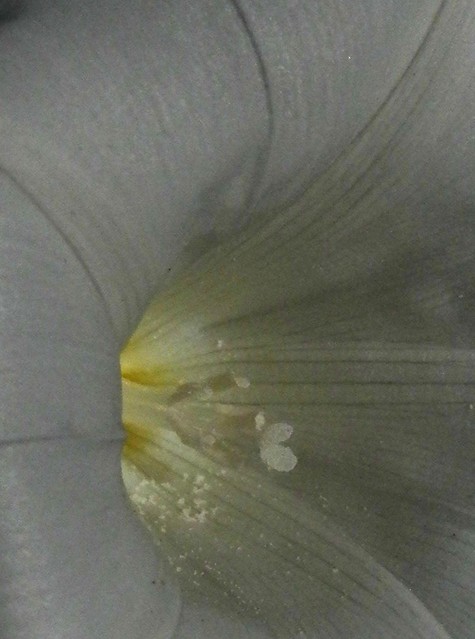
Light from the flower
Cowley (and Denham)
From George Saintsbury's Short History of English Literature (1907)
Cowley
The position now for two centuries assigned to Milton was during his lifetime held by Abraham Cowley (NOTE 1). This poet, whose popularity, extraordinarily high and extraordinarily brief, was not quite so unreasonable as his loss of it, was a Londoner born ten years after Milton, in 1618. He went to Westminster, and thence to Cambridge. He certainly wrote verse, and good verse, very early, for some of it was published when he was fifteen; but whether his reading and emulation of Spenser really enabled him to produce some of these poems at ten years old must be left to the reader. He had but just taken his Master's degree in 1643 when Cambridge fell into the power of the Parliamentarians and he was ejected, went to Oxford, where he stayed for two years, and then going with Henrietta Maria to Paris, became her secretary. After some ten years' stay abroad, in 1656 he returned to England, and was arrested, but received his liberty on condition of some indefinite compliances which are vaguely and differently related. He returned to France till the Restoration, and was then, like many other Royalists, disappointed in hopes which Charles II. was perhaps not too careful to satisfy, but which he certainly could not in all cases have satisfied if he would. Nor was it very long before a beneficial lease of the Queen's lands gave him competence, if not affluence. He retired, however, in some dudgeon to Chertsey, and died there—not finding the country quite the poet's paradise—in July 1667. 
Cowley's remarkable prose may be for the present put aside. In his verse he is not merely a most curious bridge of communication between the couplet poets, the "school of good-sense," and the metaphysicals, but almost more than Waller, and much more than Denham, the pair who usually go with him, a bridge between one whole period of poetry and another. He wrote in youth a play called The Guardian, which he did not then intend for the stage, but after the Restoration altered and acted as Cutter of Coleman Street. But this requires no special notice. His purely poetical works, which are by no means so easily to be distinguished by mere chronological order as might be thought likely, fall pretty easily into three classes when judged from the point of view of form—namely, couplet verse, lyrics and stanza poems of various kinds, and Pindarics.
NOTE 1. In Chalmers. More completely in Dr. Grosart's "Chertsey Worthies."
His couplets
Of the couplet verse the most important piece in size, as indeed it is of the whole, is the curious sacred epic of the Davideis, much of which was written at Cambridge, though it was continued (it never was completed) later. Four books exist; but even this manageable length, assisted by Cowley's immense popularity, never made it generally read. There are unquestionably fine things in it—from the opening picture of Hell, earlier by much than that of Milton, through the sketch of the Priests' College, a favourite theme with the author, and worked out by him also in prose, to David's account of Saul and of Jonathan. And the passages of length are as a rule inferior to the single lines and couplets, which are sometimes wonderfully fine. But the miscarriage of the piece as a whole may be accounted for many times over. It is true, as Johnson urges, that the story, being merely begun, has no time to justify itself, that its amplification of familiar Scripture is felt as impertinent, and that the decorations exhibit the fatal fault of the "metaphysicals" almost in the worst degree. But there is more than this. The very accomplishment of the couplets now and then jars with the phraseology and imagery, as would not have been the case in stanza or blank verse; and, little story as the poet gives himself room to tell, he interferes with the interest even of what little there is by constant divagation. The book is a museum of poetic fragments tastelessly cemented together, not an organic whole.
In his other couplet pieces, from quite early things to the translations intercalated in the Essays, Cowley shows much better, or at any rate is much more accessible, as a pioneer in the path. The piece upon the "Happy Birth of the Duke of Gloucester" in 1640, though sometimes "enjambed," shows on the whole a great preference for, and a pretty complete command of, the authentic, balanced, self-contained couplet with the cracker of rhyme at the tail of it. We only want weight to give us Dryden, and polish to give us Pope: the form is there already.
The lyrics
In his stanza-poems and lyrics proper Cowley shows the retrospective side of his poetic Janus-head, though it is observable that even in Constantia and Philetus, one of the earliest of the Juvenilia, the concluding couplets of the sizain "snap" as they would not have done in Daniel or in Drayton. The lyrics are often quite Jonsonian, while sometimes they have a lightness which Ben rarely achieved, and which is cheifly proper to his "sons," of whom Cowley was born just too late to be one. The famous Chronicle, his best-known thing, is the very best of poetic froth; while the Anacreontics are often equal to Ben, and sometimes not very far below Milton. One is frequently inclined to give Cowley a really high place, when something—his shallowness or his frigid wit, or a certain "shadow before" of eighteenth-century prose—interferes, especially in his once adored Mistress.
The Pindarics
Undoubtedly, however, Cowley's Pindarics are the most peculiar efforts of his talent, and those which, upon his own time, produced most of the effect of genius. They are little read now, and there can be no doubt thet both their structure and the presumed necessity of imitating Pindar's style of obscure conciet encouraged the metaphysical manner very treacherously. But they would be interesting to us even were they far worse than they are intrinsically, because to the historian of literature nothing can ever be uninteresting which has, for a long time, supplied an obvious literary demand on the part of readers and provided employment for great writers. To Cowley we owe—in that sense of obligation which always presupposes remembrance, that the debt would have been due to another if this man had not been in case to lend—the really magnificent odes of Dryden, Gray, and Collins pretty directly: indirectly that strill greater one of Wordsworth which is almost his solitary claim to have reached the highest summits of poetry; and many great things of Shelley and Tennyson, not to mention lesser men. And the eager adoption of the form, which for more than half a century prduced libraries full of unreadable Pindarics (the most interesting and nearly the most hopeless examples being those of no less a man than Swift), whows us what the time wanted, how it was sick of the regular stanza, how blank verse was still a little too bold for it, while it had not yet settled down or become satisfied with the regular tick of the couplet-clock. But as a matter of fact the things themselves are not contemptible. "Life and Fame," "Life," the "Ode to Mr. Hobbes," and others are, or at least contain, very fine things; and the chief drawback of the whole is that descent to colloquial abbreviations ("I'm" etc.) which was due partly to the slow vulgarising of popular taste on such points which we shall have to record, partly to the still prevailing dread of slur and trisyllabic equivalence. On the whole, no doubt, Rochester was right when he said ("profanely," as Dryden very properly adds) that "Cowley was not of God, and so he could not stand." But the special reason of his fall was that he never could make up his mind whether to stand with the old age or with the new, with the couplet or with the wilder verse, with mystical fantasy or clear common sense, with lawless splendour or jejune decency.
(...)
Cowley's Prose
(...) Until 1660 it cannot be seriously maintained that England possessed, or even had possessed, a prose style suited for those misceellaneous and average purposes which, after all, prose is chiefly meant to subserve. (...) But we have examples of Dryden's prose at a time when it is next to impossible that he could have been influenced by Tillotson; the change is evident in the work of Cowley and other earlier still; and on the whole it is far safer and far more philosophical to take it as, like other literary evolutions or revolutions, a "flying spirit on the driven air," generally diffused and felt by many if not by all, rather than as a deliberately caused product of this or that person's idiosyncrasy, or study, or simple desire of innovation.
Cowley has just been mentioned, and his case is a notable one. His small handful of extremely pleasant Essays displays many of the characteristics of the new prose, but it is most noteworthy that they seem to date from the close of his life and after the Restoration. In his most brilliant piece, the Discourse concerning Oliver Cromwell (1661), old and new jostle each other in a fashion almost startling, and the colour, form and fire of the sinister angel who defends the Protector contrast with the almost eighteenth-cnetury correctness of some passages. As in verse, Cowley is the Janus of the time, but his forward face is that which is here most noticeable.
Cowley's Prose
(...) Until 1660 it cannot be seriously maintained that England possessed, or even had possessed, a prose style suited for those misceellaneous and average purposes which, after all, prose is chiefly meant to subserve. (...) But we have examples of Dryden's prose at a time when it is next to impossible that he could have been influenced by Tillotson; the change is evident in the work of Cowley and other earlier still; and on the whole it is far safer and far more philosophical to take it as, like other literary evolutions or revolutions, a "flying spirit on the driven air," generally diffused and felt by many if not by all, rather than as a deliberately caused product of this or that person's idiosyncrasy, or study, or simple desire of innovation.
Cowley has just been mentioned, and his case is a notable one. His small handful of extremely pleasant Essays displays many of the characteristics of the new prose, but it is most noteworthy that they seem to date from the close of his life and after the Restoration. In his most brilliant piece, the Discourse concerning Oliver Cromwell (1661), old and new jostle each other in a fashion almost startling, and the colour, form and fire of the sinister angel who defends the Protector contrast with the almost eighteenth-cnetury correctness of some passages. As in verse, Cowley is the Janus of the time, but his forward face is that which is here most noticeable.
Denham
One splendid passage—which, by the way, did not appear in the first edition of the poem, Cooper's Hill, that contains it—has preserved to Sir John Denham (NOTE 1) a little of the very disproportionate reputation which he earned during his life, thanks chiefly to his younger contemporary Dryden's generous eulogy of it. He was born in Dublin, and of Irish parentage on his mother's side, in 1625; had at Oxford and Lincoln's Inn a reputation for idleness and extravagance, especially in gambling; obtained some fame in 1641 by The Sophy, and published Cooper's Hill soon afterwards; lived chiefly at Oxford during the war, and chiefly in France after it; was knighted at the Restoration, and received a valuable place, the surveyorship of the king's buildings; was unlucky in marriage, became disordered in mind, and died on 10th April 1668.
Few, except for studious curiosity, are ever likely again to read Denham through, or even any considerable part of his not extensive work. The Sophy was a feeble tragedy; Cooper's Hill, putting aside the patch
Oh! could I flow like thee
and a few other fine lines, is chiefly a creditable, and tolerable though not very early, exercise in the new kind of couplet. A verse paraphrase of the Second Aeneid adopts the older and looser "enjambed" form of the same measure; indeed, this enjambment is common in Denham, and is found in Cooper's Hill itself. Prudence, Justice, Old Age (of all odd things a verse handling of the De Senectute), The Progress of Learning, are preludes to the eighteenth-century concert of couplet tunes on things not tunable. The smaller poems, with occasional flashes, such as the happy transformation (for translation it is not) of Martial's Non ego sum Curius nec Numa nec Titius into
I pretend not to the wise ones
To the grave or the precise ones,
To the grave or the precise ones,
and a few pieces of some nobility like the elegy on Cowley and the attack on Love in favour of Friensship, are apt to oscillate between the tastelessly fantastical and the merely gross. Moreover, Denham is an eminent sinner in the small matters of grammar, rhyme, and measure which disgrace so many writers in the middle and later part of the seventeenth century and are obviously due not to any imperfect condition of the language, but to sheer carelessness and a down-at-heel fashion of literature. He has occupied that place between Cowley and Waller as the "three reformers of our numbers" so long, that he has established a title to it by prescription; and as it has long been understood what this "reform in numbers" meant, there is the less reason for turning him out. But he is much less of a poet than Cowley, while it is an injustice to couple his slatternly muse with the neat and graceful, if not radiantly lovely or bewitching, muse of Edmund Waller.
—oOo—