Blogia
Vanity Fea

Literatura y crítica

Psychoanalysis and Applied Psychoanalysis

Psychoanalysis and Applied Psychoanalysis

A contribution by Don Carveth to the PsyArt list:

When I engage in interpretation of a text that, not being a living person who has contracted with me to engage in the peculiar dialogue called psychoanalysis, I call what I am doing applied psychoanalysis. Over my career I have published a number of applied psychoanalytic studies. I don't devalue the activity. I don't devalue myself or others who engage in applied psychoanalysis. Like other forms of scholarship, applied psychoanalytic studies can be poor, mediocre, good or excellent. The mere fact that I am trained and qualified to engage in clinical psychoanalysis does not in any way guarantee that my work in applied psychoanalysis will be better or as good as that of colleagues working in applied psychoanalysis who are not clinically trained. I have the deepest respect for the work of my friend and mentor Eli Sagan whose application of psychoanalysis in the field of psycho-history and sociology is simply superb. Few clinically trained psychoanalysts could hope to accomplish as much. The point is not to value or devalue individuals.  The point is that the activities are distinctly different. Applied psychoanalysis is something different from clinical psychoanalysis. As a scholar myself, I confess that my value system is such that I am far more impressed with Eli's wonderful applied psychoanalytic scholarship than I am by the work of even my most talented clinician colleagues.  But Eli would never call himself a psychoanalyst. He had extensive personal analysis, but if he had wanted to be a psychoanalyst he would have obtained Institute training. He was too busy conducting brilliant studies in the field of applied psychoanalysis.

En terreno (des)conocido 

A photo on Flickr

Solar

Solar

Sin darme cuenta, me compré dos novelas de título parecido para este verano, Solar y Solaris. La segunda un clásico de Lem; la primera creo que será un episodio olvidable de la carrera de Ian McEwan. En realidad no es que me haya gustado leerla menos que otras suyas recientes, como Saturday, Atonement o Chesil Beach, es entretenida, divertida y con temática interesante, una especie de campus novel sobre un premio nobel astroso. Pero la impresión final es de confusión y de falta de forma, termina súbitamente quizá a la vez que la vida del protagonista Beard. El final es abierto, pero es muy creíble pensar que le da un colapso o ataque cardíaco al final, cuando ve llegar hacia él a sus dos amantes, descubierta su bigamia, justo tras haberse hundido su proyecto científico sobre energía solar. Bueno, es una resolución, pero viene a ser  tan caótica como la vida de este hombre. Es un pícaro moderno, que reúne en sí todos los extremos de la condición humana: a la vez genio y estafador a nivel científico, a partes iguales iluminado e incompetente; es repugnante, gordo bajito de malas costumbres, y a la vez seduce a una mujer tras otra, sin que por ello mejore su vida afectiva—a nivel humano es bastante impresentable, y de hecho un criminal, impostor y manipulador, aunque poco de eso se descubre, y públicamente goza de buena fama y de respeto social por un premio Nobel que ganó. En fin, quizá una novela sobre la ambigüedad de la condición humana, una demostración más de que un individuo muy concreto y específicamente delineado puede ser un paradigma de la condición humana en general. Y quizá, más en concreto, de este Occidente un tanto desquiciado que ha emprendido una carrera contra sí mismo, por perpetuar su manera de vivir despilfarradora y desordenada, una vez se van quemando los últimos cartuchos del petróleo. ¿Llegará a tiempo la energía solar? Beard, que es Occidente personificado, hace lo que puede por conseguirlo, y eso le da una dimensión heroica y grandiosa a su historia, aunque él mismo es un escéptico con el valor de la vida humana, la suya y la de los demás. En cualquier caso, parece ser que Beard pierde la carrera, y la novela es más sarcástica y pesimista que otra cosa. La vida seguirá, piensa Beard, aunque él se muera por el cáncer que ha empezado a desarrollar y en el cual prefiere no pensar. Y en todo caso, si el planeta se sume en el caos, o incluso si se extingue la humanidad, la energía del sol seguirá alimentando nuevas formas de vida. Mientras dure, que todo termina, y a veces antes de lo que pensamos.

 Ian McEwan, Saturday


The Web Preserve Thy Verve

The Web Preserve Thy Verve

Unas parodias internetizadas de poesía inglesa—seleccionadas de un duelo poético entre Abi Sutherland y Chris Clarke visto en Making Light— "The soft and unmistakable sound of a gauntlet landing on the dusty ground". Newbies, abstain.

ray caesar 4

Abi Sutherland:    

“You are old, Mr Clarke,” the woman said, stunned,
“And your music has gone out of style;
Yet your circles are full and your comments +1’d
Have you been on the net a long while?”

“In my youth,” Mr. Clarke replied to the lass,
“Our flamewars used genuine fires.
I still carve my zeroes; my ones are hand-cast.
They barely fit through the wires.”

“You are old,” said the girl, “you once used AOL
As shorthand to mean ‘you are clueless’.
I’ve no doubt at all you were once on the WELL —
Are you awestruck by all the newness?”

“In my youth,” said the blogger, pausing his post,
“Discussions on Usenet were clever.
And here we are still, and I don’t mean to boast,
But I’m just as witty as ever.”

“You are old, said the girl again, “antedating
Both Napster and Wikipedia.
Are you really a part of the world we’re creating
With sharing and social media?”

“In my youth” said the writer, “we shared without fail:
The carbon would blacken our cc’s.
We guessed from their style which posters were male,
But often we doubted their species.”

“You are old,” said the girl, “I can scarcely believe
The time you have been wasting in chatter.
What famines and poverties did you relieve
What injustices did you shatter?”

“I have answered three questions, and that is enough,”
Said Chris; “Tell me how if you’re friendless
You expect you can change all of that crucial stuff?
The potential of wank is just endless.”


Chris Clarke:   

 I

Among twenty spammy newsgroups,
The only moving thing
Was the yap of the newbie.

II
I was of three minds,
Like a tree
That was linked on Metafilter.

III
The noob mailed everyone he knew.
Text was a small part of the GIFs in MIME.

IV
A man and a woman
Are one.
A man is a woman, and a newbie
+1s.

V
I do not know which to prefer,
The beauty of clueless yammering
Or the beauty of WTF,
The newbie tweeting
Or just after.

VI

Giffy files filled my long window
With iterative trash.
The shadow of the LOLcat
Crossed it, to and fro.
The newbie
Posted in shadow
An indecipherable meme.

VII
O bloggers of Godwin,
Why do you bother with golden words?
Do you not see how the point
Flies over the heads
Of the newbies about you?

VIII
I know mobile access
In lurid, inescapable schisms;
But I know, too,
That the newbie is involved
In [FOO]FAIL 2012.

IX
When the newbie ran out of words,
It made for glee
In one or many circles.

X
At the sight of newbies
Flying in a green light,
Even the pages of Geocities
Would cry out sharply.

XI
He blogged about Lieberman
In a glass house.
Once, a fear pierced him,
That some had mistook
The outlines of his quippage
For a newbie’s.

XII
The cursor is moving.
The newbie must be lying.

XIII
It was September all year.
They were posting
And they were going to post.
The newbie sat
In the Cheeto-crumbs.


Abi Sutherland:    

Raging and raging in the lengthening thread
The mood will not heed the moderator;
Rules sprout loopholes; the FAQ cannot answer;
Mere trollery is loosed upon the site,
The lambent prose is loosed, and everywhere
The assumption of good faith is crumbled;
The best lack all conviction, while the worst
Are full of passionate intensity.

Surely some resolution is at hand;
Surely Going Viral is at hand.
Going Viral! Hardly are those words onscreen
When a vast image out of Fandom Wank
Troubles my stream: somewhere in the wilds of the net
A community with zeitgeist and common purpose,
A cause right and pitiless as the sun,
Is searching for a forum, while all their LJs
Trail threads of the approving, supportive THIS’s.
The tweets move on again; but now I know
That 287 TLDs of peaceful sites
Were vexed to nightmare by a raging thread
And what rough horde, its cause come round at last
Slouches toward my website to be borne?
 
Chris Clarke:    

Shall I compare thee to a Summer’s Eve?
Thou art more trollish and intemperate:
Rough words don’t slake your need to vent your peeve,
And someone here is past their sell-by date:
Sometime too hot the heads of heaven, mind,
And finer posts than yours rejected, Jim;
And every rant from narcissists declined,
Or from their needless words their vowels betrimm’d:
But the endless Septembering you’ve brayed
Has lost possession of what slack I owest;
Nor would Death long bear the crap you’ve laid,
When in these endless threads manure you throwest:
So long as men can breathe, or eyes can see,
Go back under your bridge, and eat my shorts.


Abi Sutherland:    

This ae site, this ae site,
So long as screen-light glowes,
Joke and jest and fire-fight,
The web preserve thy prose.

When thou from hence art AFK
To Ever September make thy way

If ever thou gavest a newbie grace
Here in comfort take thy place

If taunting newbies was thy thing
Lang may thou with griefing sting

From Ever September click away
To Blogosphere make thou thy way

If ever a stranger thou savéd from flame
Here will others for thou do the same.

If only thy friends were safe with thee
4chan is thy destiny.

From Blogosphere then click away
To Social Media make thy way.

If ever with links thou gavest credit
Thy posts and name be top on Reddit.

If links and credit thou oft left aside
Thy authorship be alway denied.

This ae site, this ae site,
So long as screen-light glowes,
Joke and jest and fire-fight,
The web preserve thy prose.


—This, ladies and gentlemen, is what the internet is for.

______


También me gustan las contribuciones de algunos comentarios, por ejemplo esta de Relic sobre los nombres de los trolls:

The Naming of Trolls is a difficult matter,
It isn't just one of your Fluorosphere games;
You may think at first I'm as mad as a hatter
When I tell you, a troll must have THREE DIFFERENT NAMES.
First of all, there's a name for defining a meddler,
Such as Sockpuppet, Cannibal, Feeder of Flames,
Such as Drive-By or Threadjacker, Hlep or Slug Peddler--
All of them trollishly suitable names.
There are subtler terms if you think they sound sweeter,
Some for the bridge-dwellers, some for their games:
Such as Churlish, Crook-Pated, Pearl Clutching, Chest-Beater--
But all of them trollishly suitable names.
But I tell you, a troll needs a name that's particular,
A name that's peculiar, and more specified,
Else how can he maintain his rant perpendicular,
Or spread his fresh compost, or keep his posts snide?
Of names of this kind, I can give you a quorum,
Such as N00B8R, Haxxor, or URn@shl,
Such as 2SMUG_180, or else WTForum-
Names that never belong to more than one troll.
But above and beyond there's still one name left over,
And that is the name that you never will guess;
The name that no Google research can discover--
But THE TROLL HIMSELF KNOWS, and will never confess.
When you notice a troll in profound frothination,
The reason, I tell you, is always the same:
His spleen is inflamed by complete liberation
From the truth, from the truth, from the truth of his name:
His indubitable dubious
Indubiouslydubitable
Real, indisputable, culpable Name.


—o este de Bruce Cohen sobre una
flame war:

The sockpuppet and the 4chan troll
met to play mortal whack-a-mole.
'Twas late at night and (as you'd expect)
neither had for the other a bit of respect.
The posters and lurkers logged in yet
perceived that flame would fill the net.
There was going to be a horrible war.
(I wasn't there, I was later told
what happened just as it did unfold).

The sockpuppet started with "I'm in your base!"
And the 4-chan troll replied "In your face!"
The site was littered, an hour or so,
With scorn and snark and to-and-fro,
While the commenters feared for peaceful status
and hoped for even a brief hiatus,
dreading the spread of the heightening flame.
(Now mind: I'm only telling you
What those who were watching swear is true!)

A lurker was startled enough to post,
that revolted as she was she was quite engrossed,
But the sockpuppet and the 4chan troll
argued and fought without self-control
Employing every meme and trope
so the comment server could barely cope.
And, oh! how the outrage and insolence flew!
(Don't fancy I would tell you wrong -
I heard it from one who was there all along!)

Next morning, as far as any could scroll,
They found no trace of sock or troll;
And some folks think unto this day
That Cthulhu stole their words away!
But the truth about the troll and sock
Is this: erased by perfect mock!
Now what do you really think of that!
(The lurkers in email told me so,
And that is how I came to know.)


La letra pequeña

Narrative Matters 2012

Narrative Matters 2012

Call for Papers: Narrative Matters 2012: Life and Narrative

The American University of Paris

CONFERENCE DATES: May 29th to June 1st 2012

DEADLINE FOR SUBMITTING ABSTRACTS: November 15, 2011

The American University of Paris, The University of Paris Diderot-Paris 7, and the Centre for Interdisciplinary Research on Narrative at St. Thomas University, invite scholars from all disciplines to reflect upon the productive interplay between life and narrative.

What is the relationship between life and narrative? As noted by Jerome Bruner in his article on “Life as Narrative” (1987), this is one of the central intellectual questions facing narrative inquiry and narrative practice across multiple disciplines – psychology, narratology and literary theory, digital media, sociology, history, sociolinguistics, philosophy, medicine, education, gerontology, communications, social work, ethics, religious studies, etc. Indeed, there is broad agreement that narrative representations (from novels to histories, biographies, websites, films, museums) and life are essential to each other. Narrative draws upon life for inspiration to create an imagined world that has substance, color, texture, and meaning. Meanwhile, life draws upon narrative for resources to imagine our identity and to interpret others, situations, and the “real” world. Both are involved in an intricate exchange, playing off one another, informing and creating one another. However, the relationship between life and narrative – between experience and story - is not merely theoretical in nature but practical as well. Narrative has a profound impact on our understanding of what it means to be human; of the choices we make as persons; of the nature of health and wellness, teaching and learning; of the meaning of history; of how social groups work through conflict; and of how the cultural and political world is ordered.

Panels and papers
Scholars are invited to organize panel sessions and present papers on various aspects of the broad theme of “Life and Narrative.” Possible questions include:

•    What is the relationship between telling and living?
•    How can the narrative concept help us to better understand experience, interpretation and action?
•    What does literature teach us about aspects of life, experience, mind, and social relationships?
•    How can narrative research have a greater impact on the lives of real persons and institutions? How can narrative theory and practice better inform one another?
•    Can there be a “true” narrative? What are the boundaries between fact and fiction, between autobiography and autofiction?
•    How is identity storied, restoried, even de-storied across the lifespan?
•    What is the effect of the media (new and old) on identity?
•    What is the relationship between what is archived in individual memories and social institutions and the stories that we tell?

Conversations
Two plenary sessions will ask prominent scholars from different disciplines to present a short paper and discuss a central question related to life and narrative. Time will be given for debate and interaction between the presenters and the audience.

Confirmed Plenary speakers
Mark Freeman, College of The Holy Cross
, Kings College London
James Phelan, Ohio State University

Comparing interpretations
A final plenary will compare and contrast approaches to the study of narrative. Our plenary speakers will discuss approaches to the study of research interviews and literature. The audience will be provided with the texts in advance of the plenary and will be given ample opportunity to exchange ideas with the panelists.

Language
Although the language of the conference will be in English, papers delivered in French are welcome. Scholars presenting papers in French are requested to bring a translated copy of their paper to the conference for distribution to the audience.

Workshops
Preconference workshops will be organized, principally for graduate students and beginning scholars, along the following themes:
1.    Translating narrative theory
2.    Doing narrative inquiry
3.    Digital narratives
4.    Narrative and social change
   
Guidelines for submissions
We welcome proposals for individual papers (20 minutes plus ten minutes for questions) and panels (90 minutes). Submissions should be in the language of presentation (English or French). Please submit your proposal, including an abstract of less than 250 words, on-line at: http://my.aup.edu/conference/narrative-matters-2012

Abstracts are due on November 15, 2011.

Publications
An edited book will be published including the best submissions from the conference. If you would like your paper to be considered, please submit a complete draft no later than May 30, 2012.

Conference website
Coming soon.

Contact information
If you have questions, please email us at narrativematters2012@aup.fr.

Organizing committee
Brian Schiff. The American University of Paris.
Sylvie Patron.The University of Paris Diderot-Paris 7.
Claudia Roda. The American University of Paris.
William Randall. St. Thomas University.
Elizabeth McKim. St. Thomas University.
Andrea Olguin.
The American University of Paris. 


Nuestras vidas, ¿son relatos?


A photo on Flickr

Quisimos vivir, aún quedan indicios

Quisimos vivir, aún quedan indicios

Leyendo los poemas desencantados de Houellebecq en Intervenciones. Dicen así, traduits, trahis, un par de fragmentos del final de Opera Bianca:corazón

Mujer: Llega un momento en que las palabras dichas
            en lugar de convertirse en destellos de luz

            se retuercen en torno a uno, ahogan sus ideas.
            Las palabras están hechas de cierta materia.
            (Una materia viscosa

            cuando pesan mucho;
            así ocurre con las palabras de amor,
            con la materia amorosa.)

Hombre: La vida se perpetúa de relámpago en relámpago,
           la información circula;
           en el fondo de la noche se enlazan los destinos;
           las cartas están marcadas


M:     Atravesamos los días con el rostro inmóvil,
           Ya no hay amor en nuestras miradas estériles,
           la infancia ha terminado, la suerte está echada,

           nos acercamos al final de la partida.

H.    Las últimas partículas
          flotan a la deriva en el silencio
          y el vacío articula
          su presencia en la noche.

M:     El polvo forma torbellinos en el suelo gris;
          una ráfaga de viento purifica el espacio.
          Quisimos vivir, aún quedan indicios;
          nuestros cuerpos se suspenden en la espera.

________


H:       Cargadas de energía, unas partículas circulan en un espacio cerrado, durante un tiempo limitado. Llamemos ciudad a ese espacio, comparemos la energía con el deseo; tendremos una metáfora de la vida.

M:     Crees que delimitas seres individuales,
          a cada paso tu ojo toma una medida;
          hay excepciones, casos residuales,
          pero tú estás seguro de tí mismo, conoces la naturaleza.

H:       Obedeciendo a la teoría de los choques, las partículas reaccionan cubriéndose de caparazones, de espinas, de armas defensivas u ofensivas; tenemos una metáfora de la evolución animal.

M:     En medio de la noche ves las trayectorias
          de objetos que circulan, claras como a la luz del día;

          para tí la libertad es el sentido de la historia
          y la acción a distancia es un sueño impreciso.

H:       Como la roca necesita el agua
          que la erosiona,
          así nosotros necesitamos nuevas metáforas.

M:       Tienes una agenda y unas coordenadas;
          los humanos son móviles y a menudo vulnerables;
          chocan von los humanos durante algunos años;
          luego se descomponen en agregados inestables.

          Dos partículas se reúnen
          y tienen una función de onda común;
          después se separan en la noche,
          se alejan.

          Sometamos la partícula B a la acción de un campo eléctrico;
          la partícula A reaccionará de forma idéntica;
          sea cual sea la distancia
          habrá una acción, una influencia.

H:       La separación del mundo en objetos es una proyección mental. Ocurren ciertos fenómenos; se determina un dispositivo experimental. La comunidad de los observadores puede llegar a un acuerdo sobre el resultado de las medidas. Se pueden definir unos valores con cierta aproximación. Esos valores son el resultado de una interacción entre el mundo, la conciencia y el instrumento. Así, a través de una intersubjetividad razonable, podemos hablar sobre lo que hemos observado, lo que hemos visto, lo que hemos aprendido.


Barthelme, intent...


La espiral hermenéutica

miércoles 13 de julio de 2011

La espiral hermenéutica


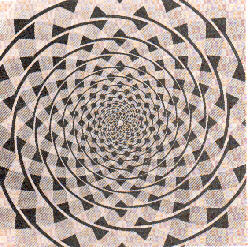
espiral 
Un artículo que termino de colgar antes de que cumpla diez años... Lo presenté a un congreso en 2002, y se les olvidó publicarlo en las actas, así por descuido. Así que lo envié a una revista belga, en inglés, y luego el español lo revisé y lo acabé publicando en un libro de homenaje a Hans-Georg Gadamer. Aquí están sus avatares en red y fuera de ella.

José Angel García Landa. "Tematización retroactiva, interacción e interpretación: La espiral hermenéutica de Schleiermacher a Goffman." Comunicación presentada en el XXVI Congreso AEDEAN (Santiago de Compostela, diciembre de 2002).

_____. "Tematización retroactiva, interacción e interpretación: La espiral hermenéutica de Schleiermacher a Goffman." In Hans-Georg Gadamer: Ontología estética y hermenéutica. Ed. Teresa Oñate y Zubía, Cristina García Santos y Miguel Ángel Quintana Paz. Con el "Grupo de Investigaciones estético-políticas Palimpsestos. Facultad de Filosofía, UNED. Book + DVD: "Gadamer: memoria de un siglo". Madrid: Dykinson, 2005. 679-88.
http://www.uma.es/gadamer/OnateI.htm

_____. "Retroactive Thematization, Interaction, and Interpretation: The Hermeneutic Spiral from Schleiermacher to Goffman / Tematización Retroactiva, Interacción e Interpretación: La espiral hermenéutica de Schleiermacher a Goffman (Spanish)." PDF en red en Social Science Research Network 17 junio 2011.
http://ssrn.com/abstract=1856424

_____. "Retroactive Thematization, Interaction, and Interpretation: The Hermeneutic Spiral from Schleiermacher to Goffman." BELL (Belgian English Language and Literature) ns 2 (2004):  155-66.* (Special issue, "The Language/Literature Interface). http://www.baahe.be/BELL2004.html

_____. "Retroactive Thematization, Interaction, and Interpretation: The Hermeneutic Spiral from Schleiermacher to Goffman." PDF en red en García Landa, Vanity Fea 29 nov. 2006.
http://garciala.blogia.com/2006/112902-retroactive-thematization-interaction-and-interpretation.php

_____. "Retroactive Thematization, Interaction, and Interpretation: The Hermeneutic Spiral from Schleiermacher to Goffman." iPaper en Academia.edu
http://unizar.academia.edu/Jos%C3%A9AngelGarc%C3%ADaLanda/Papers/92673/Retroactive-Thematization--Interaction--and-Interpretation--The-Hermeneutic-Spiral-from-Schleiermacher-to-Goffman

_____. "Retroactive Thematization, Interaction, and Interpretation: The Hermeneutic Spiral from Schleiermacher to Goffman." PDF en red en Zaguán 3 feb. 2009.
http://zaguan.unizar.es/record/1986

_____. "Retroactive Thematization, Interaction, and Interpretation: The Hermeneutic Spiral from Schleiermacher to Goffman." PDF en red en ResearchGate (2010).* http://www.researchgate.net/publication/33419604_Retroactive_Thematization_Interaction_and_Interpretation_The_Hermeneutic_Spiral_from_Schleiermacher_to_Goffman


Understanding Misreading: A Hermeneutic-Deconstructive Approach


Quedarse inmóvil unos segundos

Quedarse inmóvil unos segundos

Entre la colecta de libros para el verano, me compré Intervenciones, de Michel Houellebecq, y me ha gustado su ensayo "Aproximaciones al desasosiego", no sólo el título. Houellebecq mira de manera ácida y desapegada la civilización postcapitalista e hipermediática en la que vive, y en el ensayo expresa el desarraigo que se siente en la época de aceleración consumista y proliferación de modas e imágenes. Es también una defensa de la literatura, arte conceptual por excelencia: sus musnos virtuales dice que nada tiene que temer de la realidad virtual de los ordenadores, pues ya de por sí sustituye a la misma realidad y proporciona una inmersión en un mundo aislado y propio—y sin embargo la gente no saca tiempo para leer, como no saca para otras cosas, y es guiada por las imágenes del consumo descerebrado y acelerado. Pretende Houellebecq escribir novelas totales, donde quepa de todo, ciencia y reflexión también, y que la forma cuide de sí misma—lo que él quiere sugerir es más bien un cierto impulso o movimiento, y eso hace que sus textos se lean bien la primera vez pero quizá no se dejen releer mucho, es también arbitrario y simplista a veces, con toda su complejidad. Este es el final del ensayo y loa a la literatura en la era de la información:

La literatura puede con todo, se adapta a todo, escarba en la basura, lame las heridas de la infelicidad. Por eso fue posible que una poesía paradójica, de la angustia y de la opresión, naciera en medio de los hipermercados y de los edificios de oficinas.  No es una poesía alegre; no puede serlo. La poesía moderna ya no aspira a construir una hipotética "casa del Ser", del mismo modo que la arquitectura moderna no aspira a construir lugares habitables; sería una tarea muy diferente de la que consiste en multiplicar las infraestructuras de  circulación y de tratamiento de la información. La información, producto residual de la no permanencia, se opone al significado como el plasma al cristal; una sociedad que alcanza un grado de sobrecalentamiento no siempre implosiona, pero se muestra incapaz de generar un significado, ya que toda su energía está monopolizada por la descripción informativa de sus variaciones aleatorias. Sin embargo, cada individuo es capaz de producir en sí mismo una especie de revolución fría, situándose por un instante fuera del flujo informativo-publicitario. spektor2


(Me pregunto, por cierto, si hacer un blog misceláneo y sin comentarios como éste no será una mezcla extraña o imposible no sólo de ficción y reflexión, sino también de inmersión en el consumismo informativo y de ... revolución fría, o aislamiento de ese flujo. Termina así Houellebecq:)

Es muy fácil de hacer; de hecho, nunca ha sido tan fácil como ahora situarse en una posición estética con relación al mundo: basta con dar un paso a un lado. Y, en última instancia, incluso este paso es inútil. Basta con hacer una pausa; apagar la radio, desenchufar el televisor; no comprar nada, no desear comprar. Basta con dejar de participar, dejar de saber; suspender literalmente cualquier actividad mental. Basta, literalmente, con quedarse inmóvil unos segundos.


El mapa y el territorio


Hegel on Wilde

Hegel on Wilde

The avatars of mind in Hegel's The Phenomenology of Spirit include some paragraphs on the witty spirit—as a mode of reaction of the individual subject in the face of the dominance of money interests as a criterion of value. Verbal irony in the age of high accumulation, or perhaps a skeptical flâneur in the age of mechanical capitalism, exposing its contradictions in polished pellets of expression. One cannot but feel that in the following account Hegel is referring to Oscar Wilde—not in 1807, but now.

 §520.
Just as self-consciousness had its own language with state power, in other words, just as Spirit emerged as actively mediating between these extremes, so also has self-consciousness its own language in dealing with wealth; but still more so when it rebels. The language that gives wealth a sense of its essential significance, and thereby gains possession of it, is likewise the language of flattery, but of base flattery; for what it pronounces to be an essence, it knows to be expendable, to be without any intrinsic being. The language of flattery, however, as we have already observed, is Spirit that is still one-sided. For although its moments are indeed the self which has been refined by the discipline of service into a pure existence, and the intrinsic being of power, yet the pure Notion in which the simple, unitary self and the in-itself, the former a pure 'I' and the latter this pure essence or thought, are the same—this unity of the two sides which are in reciprocal relation is not present in the consciousness that uses this language. The object is still for consciousness an intrinsic being in contrast to the self, that is, the object is not for consciousness at the same time consciousness's own self as such. The language of the disrupted consciousness is, however, the perfect language and the authentic existent Spirit of this entire world of culture. This self-consciousness which rebels against this rejection of itself is eo ipso absolutely self-identical in its absolute disruption, the pure mediation of pure self-consciousness with itself. It is the sameness of the identical judgement in which one and the same personality is both subject and predicate. But this identical judgement is at the same time the infinite judgement; for this personality is absolutelly dirempted, and subject and predicate are utterly indifferent, immediate beings which have nothing to do with one another, which have no necessary unity, so much so that each is the power of a separate independent personality. The being-for-self [of this consciousness] has its own being-for-self for object as an out-and-out 'other'; not as if this had a different content, for the content is the same self in the form of an absolute antithesis and a completely indifferent existence of its own. Here, then, we have the Spirit of this real world of culture, Spirit that is conscious of itself in its truth and in its Notion.

§521. It is this absolute and universal inversion of the actual world o thought: it is pure culture. What is learnt in this world is that neither the actuality of power and wealth, nor their specific Notions, 'good' and 'bad', or the consciousness of 'good' and 'bad'  (the noble and the ignoble consciousness), possess truth; on the contrary, all these moments become inverted, one changing into the other, and each is the opposite of itself. The universal power, which is the Substance, when it acquires a spiritual nature of its own through the principle of individuality, receives its own self merely as a name, and though it is the actuality of power, is really the powerless being that sacrifices its own self. But this expendable, self-less being, or the self that has become a Thing, is rather the return of that being into itself; it is being-for-self that is explicitly for itself, the concrete existence of Spirit. The thoughts of these two essences, of 'good' and 'bad', are similarly inverted in this movement; what is characterized as good is bad, and vice-versa. The consciousness of each of these moments, the consciousness judged as noble and ignoble, are rather. in their truth just as much the reverse of what these characterizations are supposed to be; the noble consciousness is ignoble and repudiated, just as the repudiated consciousness changes round into the nobility which characterizes the most highly developed freedom of self-consciousness. From a formal standpoint, everything is outwardly the reverse of what it is for itself; and again, it is not in truth what it is for itself, but something else than it wants to be; being-for-self is rather the loss of itself, and its self-alienation rather the preservation of itself. What we have here, then, is that all the moments execute a universal justice on one another, each just as much alienates its own self, as it forms itself into its opposite and in this way inverts it. True Spirit, however, is just this unity of the absolutely separate moments, and, indeed, it is just through the free actuality of these selfless extremes that, as their middle term, it achieves a concrete existence. It exists in the universal talk and destructive judgement which strips of their significance all those moments which are supposed to count as the true being and as actual members of the whole, and is equally this nihilistic game which it plays with itself. This judging and talking is, therefore, what is true and invincible, while it overpowers everything; it is solely with this alone that one has truly to do with in this actual world. In this world, the Spirit of each part finds expression, or is wittily talked about, and finds said about it what it is. The honest individual takes each moment to be an abiding essentiality, and is the uneducated thoughtlessness of not knowing that it is equally doing the reverse. The disrupted consciousness, however, is consciousness of the perversion, and, moreover, of the absolute perversion. What prevails in it is the Notion, which brings together in a unity the thoughts which, in the honest individual, lie far apart, and its language is therefore clever and witty. oscar wilde

§522. The content of what Spirit says about itself is thus the perversion of every Notion and reality, the universal deception of oneself and others; and the shamelessness which gives utterance to this deception is just for that reason the greatest truth. This kind of talk is the madness of the musician 'who heaped up and mixed together thirty arias, Italian, French, tragic, comic, of every sort; now with a deep bass he descended into hell, then, contracting his throat, he rent the vaults of heaven with a falsetto tone, frantic and soothed, imperios and mocking, by turns' (Diderot, Nephew of Rameau).  To the tranquil consciousness which, in its honest way, takes the melody of the Good and the True to consist in the evenness of the notes, i.e. in unison, this talk appears as a 'rigmarole of wisdom and folly, as a medley of as much skill as baseness, of as many correct as false ideas, a mixture compounded of a complete perversion of sentiment, of absolute shamefulness, and of perfect frankness and truth. It will be unable to refrain from entering into all these tones and running up and down the entire scale of feelings from the profoundest contempt and dejection to the highest pitch of admiration and emotion; but blended with the latter will be a tinge of ridicule which spoils them' (ibid.). The former, however, will find in their subversive depths the all-powerful note which restores Spirit to itself.

J. N. Findlay's account of the following paragraphs is as follows:

§523. Plain sense and sound morality can teach this disintegrated brilliance nothing that it does not know. It can merely utter some of the syllables the latter weaves into its piebald discourse. In conceding that the bad and the good are mixed in life, it merely substitutes dull platitude for witty brilliance.

§524. The disintegrated consciousness can be noble and edifying but this is for it only one note among others. To ask it to forsake its disintegration is merely, from its own point of view, to preach a new eccentricity, that of Diogenes in his tub.

§525. The disintegrated consciousness is, however, on the way to transcending its disintegration. It sees the vanity of treating all things as vain, and so becomes serious.

§526. Wit really emancipates the disintegrated consciousness from finite material aim and gives it true spiritual freedom. In knowing itself as disintegrated it also rises above this, and achieves a truly positive self-consciousness.

In Hegel's words—here's where he comments on Wilde, and on the self-transcending vanity of wit:

§525. But in point of fact, Spirit has already accomplished this in principle [i.e. its own dissolution, winning for itself a still higher consciousness]. The consciousness that is aware of its disruption and openly declares it, derides existence and the universal confusion, and derides its own self as well; it is at the same time the fading, but still audible, sound of all this confusion. This vanity of all reality and every definite Notion, vanity which knows itself to be such, is the double reflection of the real world into itself: once in this particular self of consciousness qua particular, and again in the pure universality of consciousness, or in thought. In the first case, Spirit that has come to itself has directed its gaze to the world of actuality and still has there its purpose and immediate content; but, in the other case, its gaze is in part turned only inward and negatively against it, and in part is turned away from that world towards heaven, and its object is the beyond of this world.

§526. In that aspect of the return into the self, the vanity of all things is its own vanity, it is itself vain. It is the self-centred self that knows, not only how to pass judgement on and chatter about everything, but how to give witty expression to the contradiction that is present in the solid elements of the actual world, as also in the fixed determinations posited by judgement; and this contradiction is their truth. Looked at from the point of view of form, it knows everything to be self-alienated, being-for-self is separated from being-in-itself; what is meant, and purpose, are separated from truth; and from both again, the being-for-another, the ostensible meaning from the real meaning, from the true thing and intention. Thus it knows how to give correct expression to each moment in relation to its opposite, in general, how to express accurately the perversion of everything; it knows better than each what each is, no matter what its specific nature is. Since it knows the substantial from the side of the ddisunion and conflict which are united within the substantial itself, but not from the side of this union, it understands very well how to pass judgement on it, but has lost the ability to comprehend it. This vanity at the same time needs the vanity of all things in order to get from them the consciousness of self; it therefore creates this vanity itself and is the soul that supports it. Power and wealth are the supreme ends of its exertions, it knows that through renunciation and sacrifice it forms itself into the universal, attains to the possession of it, and in this possession is universally recognized and accepted: state power and wealth are the real and acknowledged powers. However, this recognition and acceptance is itself vain; and just by taking possession of power and wealth it knows them to be without a self of their own, knows rather that it is the power over them, while they are vain things. The fact that in possessing them it is itself apart from and beyond them, is exhibited in its witty talk which is, therefore, its supreme interest and the truth of the whole relationship. In such talk, this particular self, qua this pure self, determined neither by reality nor by thought, develops into a spiritual self that is of truly universal worth. It is the self-disruptive nature of all relationships and the conscious disruption of them; but only as self-consciousness in revolt is it aware of its own disrupted state, and in thus knowing it has immediately risen above it. In that vanity, all content is turned into something negative which can no longer be grasped as having a positive significance. The positive object is merely the pure 'I' itself, and the disrupted consciousness in itself this pure self-identity of self-consciousness that has returned to itself.

Hegel's account of the self-transcendence of wit probably owes something to Friedrich Schlegel's notion of the reflexive and self-critical "romantic irony" in Athenäum. However, it might be argued that its main inspiration comes from the future—from the as yet imperfectly realized odyssey of the spirit in the work and personality of Oscar Wilde.


—oOo—


—And as a reminder, here follow some examples of paradoxical brilliance from the Wilde side:


People fashion their God after their own understanding. They make their God first and worship him afterwards.

There is only one thing in the world that is worse than being talked about, and that is not being talked about.

The only way to get rid of a temptation is to yield to it.

Work is the curse of the drinking classes.

Always forgive your enemies; nothing annoys them so much.

The world is a stage, but the play is badly cast.

Alas, I am dying beyond my means.

I never put off till tomorrow what I can do the day after.

In examinations the foolish ask questions that the wise cannot answer.

One should always be in love; that is the reason one should never marry.

A man who desires to get married should know either everything or nothing.

America is the only country that went from barbarism to decadence without civilization in between.

All art is quite useless.

Education is an admirable thing, but it is well to remember from time to time that nothing that is worth knowing can be taught.

I sometimes think that God in creating man somewhat overestimated his ability.

Some cause happiness wherever they go; others, whenever they go.

A cynic is a man who knows the price of everything and the value of nothing.

Fashion is a form of ugliness so intolerable that we have to alter it every six months.

The old believe everything; the middle-aged suspect everything; the young know everything.

Marriage is the triumph of imagination over intelligence. Second marriage is the triumph of hope over experience.

To live is the rarest thing in the world. Most people exist, that is all.

Disobedience, in the eyes of anyone who has read history, is man’s original virtue. It is through disobedience that progress has been made, through disobedience and through rebellion.

To love oneself is the beginning of a lifelong romance.

I am not young enough to know everything.

I choose my friends for their good looks, my acquaintances for their good characters, and my enemies for their good intellects. A man cannot be too careful in the choice of his enemies. I have not got one who is a fool. They are all men of some intellectual power, and consequently they all appreciate me.
    -Henry Wotton, The Picture of Dorian Gray

Laughter is not at all a bad beginning to a friendship, and it is far the best ending to one.
    -Henry Wotton, The Picture of Dorian Gray

The aim of life is self-development. To realize one’s nature perfectly—that is what each of us is here for.
    -Henry Wotton, The Picture of Dorian Gray

Peole say sometimes that Beauty is only superficial. That may be so. But at least it is not so superficial as Thought is. To me, Beauty is the wonder of wonders. It is only shallow people who do not judge by appearances.
    -Henry Wotton, The Picture of Dorian Gray

Science is the record of dead religions.

Only the shallow know themselves.


(A Truth of Masks)