
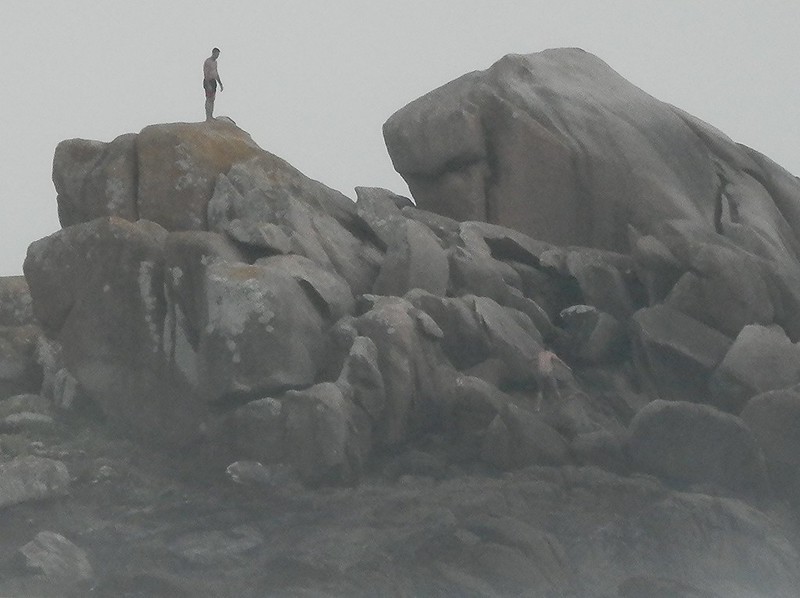
Rock Man
Retropost (2006): La familia por la red
La familia por la red
Publicado en Personales. com. José Ángel García Landa
Después de ser el único tío con blog desde hace tiempo en mi familia, tengo ahora una sobrina con blog, Blanquita, en http://superblan.blogia.com. Su hermana Lizara no se anima al blog pero se dedica a escribir "slash fiction" sobre Harry Potter (y sobre todo sobre su admirado Draco Malfoy). Aquí en Fan Fiction (donde firma como "Chil") podéis leer una bonita historia de amor homosexual, con filtro de amor y todo, entre Harry Potter y Draco Malfoy. Por lo que se ve (según la Routledge Encyclopedia of Narrative Theory) esto de las reescrituras homosexualizantes de personajes populares por parte de sus fans es todo un género bien establecido. Curioso. En fin, que la joven generación viene que arrasa por la red. Y próximamente también puede que arranque otro blog familiar en http://puntaescarra.blogia.com . Autoría aún desconocida, posiblemente anónima, posiblemente inexistente...
—oOo—
César Vidal - El día de la Hispanidad
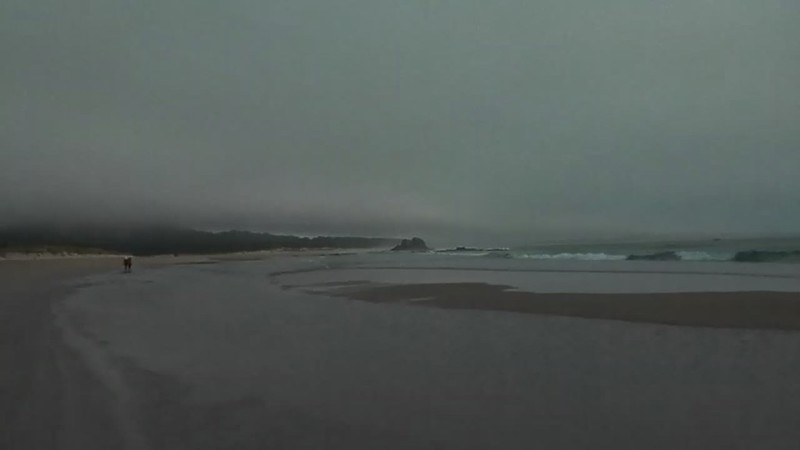
Playa de viento y olas
The Fruits of Her Labors
The Fruits of Her Labors
Una sátira sobre nuestro mundo de las redes sociales ambientales, posicionamiento web, y la vida mediada por ordenador:
(De The Circle, Dave Eggers 2013).
And immediately the fruits of her labors were evident. There was a river of congratulatory messages on her third screen, from Dan, Jared, Josiah, Denise, five or so messages from each of them, and at least a dozen from Annie, who seemed so proud and excited she might burst. Word spread through the InnerCircle, and Mae was sent 7,716 smiles by noon. Everyone had known she could do it. Everyone saw great things fro her at the Circle, everyone was certain she would graduate from CE in no time, as soon as september, because rarely had anyone risen so quickly through the PartiRank and with such laser-like focus.
Mae's new feeling of competence and confidence carried her through the week, and given how close she was to the top 2,000, she stayed at her desk late through the weekend and early the next week, determined to crack through, sleeping in the same dorm room every night. She knew the upper 2,000, nicknamed T2K, was a group of Circlers almost maniacal in their social activity and elite in their corresponding followers. The members of the T2K had been more or less locked in place, with few additions or movements within their ranks, for almost eighteen months.
But Mae knew she needed to try. By Thursday night, she'd gotten to 2,219, and knew she was among a group of similar strivers who were, like her, working feverishly to rise. She worked for an hour and saw herself climb only two spots, to 2,217. This would be difficult, she knew, but the challenge was delicious. And every time she'd risen to a new thousand, she received so many accolades, and felt she was repaying Annie in particular, that it drove her on.
By ten o'clock, just when she was tiring, and when she'd gotten as high as 2,188, she had the revelation that she was young, and she was strong, and if she worked thorugh the night, one night without sleep, she could crack the T2K while everyoned else was unconscious. She fortified herself with an energy drink and gummy worms, and when the caffeine and sugar kicked in, she felt invincible. The third screen's InnerCircle wasn't enough. She tuned on her OuterCircle feed, and was handling that without difficulty. She pushed foward, signing up for a few hundred more Zing feeds, starting with a comment on each. She was soon at 2,012, and now she was really getting resistance. She posted 33 comments on a product-test site and rose to 2,009. She looked at her left wrist to see how her body was responding, and thrilled at the sight of her pulse-rate increasing. She was in command of all this and needed more. The total number of stats she was tracking was only 41. There was her aggregate customer service score, whih was at 97. There was her last score, which was 99. There was the average of her pod, which was 96. There was the number of queries handled that day thus far, 221, and the number of queries handled by that time yesterday, 219, and the number handled by her on average, 220, and by the pod's other members: 198. On her second screen, there were the number of messages sent by other staffers that day, 1,192, and the number of those messages that she'd read, 239, and the number to which she'd responded, 88. There was the number of recent invitations to Circle company events, 41, and the number she'd responded to, 28. There was the number of overall visitors to the Circle's sites that day, 3.2 billion, and the number of pageviews, 88,7 billion. There was the number of friends in Mae's Outer Circle, 762, and outstanding Requests by those wanting to be her friend, 27. There were the number of zingers she was following, 10,343, and the number following her, 18,198. There was the number of unread zings, 887. There was the number of zingers suggested to her, 12,862. There was the number of songs in her digital library, 6,877, number of artists represented, 921, and based on her tastes, the number of artists recommended to her: 3,408. There was the number of images in her library, 33,002, and number of images recommended to her, 100,038. There was the temperature inside the building, 70, and the temperature outside, 71. There was the number of staffers on campus that day, and number of visitors to campus that day, 248. Mae had news alerts for 45 names and subjects, and each time any one of them was mentioned by any of the news feeds she favored, she received a notice. That day there were 187. She could see how many people had viewd her profile that day, 210, and how much time on average they spent: 1.3 minutes. I f she wanted, of course, she could go deeper, and see precisely what each person had viewed. Her health stats added a few dozen more numbers, each of them giving her a sense of grat calm and control. She knew her heart rate and knew it was right. She knew her step count, almost 8,200 that day, and knew that she could get to 10,000 with ease. She knew she was properly hydrated and that her caloric intake that day was within accepted norms for someone of her body-mass index. It occurred to her in a moment of sudden clarity, that what had always caused her anxiety, or stress, or worry, was not any one force, nothing independent and external—it wasn't danger to herself or the constant calamity of other people and their problems. It was internal: it was subjective: it was not knowing. (192-94)

Mae's new feeling of competence and confidence carried her through the week, and given how close she was to the top 2,000, she stayed at her desk late through the weekend and early the next week, determined to crack through, sleeping in the same dorm room every night. She knew the upper 2,000, nicknamed T2K, was a group of Circlers almost maniacal in their social activity and elite in their corresponding followers. The members of the T2K had been more or less locked in place, with few additions or movements within their ranks, for almost eighteen months.
But Mae knew she needed to try. By Thursday night, she'd gotten to 2,219, and knew she was among a group of similar strivers who were, like her, working feverishly to rise. She worked for an hour and saw herself climb only two spots, to 2,217. This would be difficult, she knew, but the challenge was delicious. And every time she'd risen to a new thousand, she received so many accolades, and felt she was repaying Annie in particular, that it drove her on.
By ten o'clock, just when she was tiring, and when she'd gotten as high as 2,188, she had the revelation that she was young, and she was strong, and if she worked thorugh the night, one night without sleep, she could crack the T2K while everyoned else was unconscious. She fortified herself with an energy drink and gummy worms, and when the caffeine and sugar kicked in, she felt invincible. The third screen's InnerCircle wasn't enough. She tuned on her OuterCircle feed, and was handling that without difficulty. She pushed foward, signing up for a few hundred more Zing feeds, starting with a comment on each. She was soon at 2,012, and now she was really getting resistance. She posted 33 comments on a product-test site and rose to 2,009. She looked at her left wrist to see how her body was responding, and thrilled at the sight of her pulse-rate increasing. She was in command of all this and needed more. The total number of stats she was tracking was only 41. There was her aggregate customer service score, whih was at 97. There was her last score, which was 99. There was the average of her pod, which was 96. There was the number of queries handled that day thus far, 221, and the number of queries handled by that time yesterday, 219, and the number handled by her on average, 220, and by the pod's other members: 198. On her second screen, there were the number of messages sent by other staffers that day, 1,192, and the number of those messages that she'd read, 239, and the number to which she'd responded, 88. There was the number of recent invitations to Circle company events, 41, and the number she'd responded to, 28. There was the number of overall visitors to the Circle's sites that day, 3.2 billion, and the number of pageviews, 88,7 billion. There was the number of friends in Mae's Outer Circle, 762, and outstanding Requests by those wanting to be her friend, 27. There were the number of zingers she was following, 10,343, and the number following her, 18,198. There was the number of unread zings, 887. There was the number of zingers suggested to her, 12,862. There was the number of songs in her digital library, 6,877, number of artists represented, 921, and based on her tastes, the number of artists recommended to her: 3,408. There was the number of images in her library, 33,002, and number of images recommended to her, 100,038. There was the temperature inside the building, 70, and the temperature outside, 71. There was the number of staffers on campus that day, and number of visitors to campus that day, 248. Mae had news alerts for 45 names and subjects, and each time any one of them was mentioned by any of the news feeds she favored, she received a notice. That day there were 187. She could see how many people had viewd her profile that day, 210, and how much time on average they spent: 1.3 minutes. I f she wanted, of course, she could go deeper, and see precisely what each person had viewed. Her health stats added a few dozen more numbers, each of them giving her a sense of grat calm and control. She knew her heart rate and knew it was right. She knew her step count, almost 8,200 that day, and knew that she could get to 10,000 with ease. She knew she was properly hydrated and that her caloric intake that day was within accepted norms for someone of her body-mass index. It occurred to her in a moment of sudden clarity, that what had always caused her anxiety, or stress, or worry, was not any one force, nothing independent and external—it wasn't danger to herself or the constant calamity of other people and their problems. It was internal: it was subjective: it was not knowing. (192-94)
A comparar con un clásico que podríamos considerar, quizá, el germen originario del que derivó la visión de la sobreinformación globalizada, de la red social virtualizada, y del control total por ordenación—The Machine Stops, de cuyo comienzo selecciono dos fragmentos:
Imagine, if you can, a small room, hexagonal in shape, like the cell of a bee. It is lighted neither by window nor by lamp, yet it is filled with a soft radiance. There are no apertures for ventilation, yet the air is fresh. There are no musical instruments, and yet, at the moment that my meditation opens, this room is throbbing with melodious sounds. An armchair is in the centre, by its side a reading-desk-that is all the furniture. And in the armchair there sits a swaddled lump of flesh-a woman, about five feet high, with a face as white as a fungus. It is to her that the little room belongs.
An electric bell rang.
The woman touched a switch and the music was silent.
"I suppose I must see who it is", she thought, and set her chair in motion. The chair, like the music, was worked by machinery and it rolled her to the other side of the room where the bell still rang importunately.
"Who is it?" she called. Her voice was irritable, for she had been interrupted often since the music began. She knew several thousand people, in certain directions human intercourse had advanced enormously.
But when she listened into the receiver, her white face wrinkled into smiles, and she said:
"Very well. Let us talk, I will isolate myself. I do not expect anything important will happen for the next five minutes-for I can give you fully five minutes, Kuno. Then I must deliver my lecture on “Music during the Australian Period”."
(...)
"The truth is," he continued, "that I want to see these stars again. They are curious stars. I want to see them not from the air-ship, but from the surface of the earth, as our ancestors did, thousands of years ago. I want to visit the surface of the earth."
She was shocked again.
"Mother, you must come, if only to explain to me what is the harm of visiting the surface of the earth."
"No harm," she replied, controlling herself. "But no advantage. The surface of the earth is only dust and mud, no advantage. The surface of the earth is only dust and mud, no life remains on it, and you would need a respirator, or the cold of the outer air would kill you. One dies immediately in the outer air."
"I know; of course I shall take all precautions."
"And besides----"
"Well?"
She considered, and chose her words with care. Her son had a queer temper, and she wished to dissuade him from the expedition.
"It is contrary to the spirit of the age," she asserted.
"Do you mean by that, contrary to the Machine?"
"In a sense, but----"
His image is the blue plate faded.
"Kuno!"
He had isolated himself.
For a moment Vashti felt lonely.
Then she generated the light, and the sight of her room, flooded with radiance and studded with electric buttons, revived her. There were buttons and switches everywhere - buttons to call for food for music, for clothing. There was the hot-bath button, by pressure of which a basin of (imitation) marble rose out of the floor, filled to the brim with a warm deodorized liquid. There was the cold-bath button. There was the button that produced literature. and there were of course the buttons by which she communicated with her friends. The room, though it contained nothing, was in touch with all that she cared for in the world.
Vashanti"s next move was to turn off the isolation switch, and all the accumulations of the last three minutes burst upon her. The room was filled with the noise of bells, and speaking-tubes. What was the new food like? Could she recommend it? Has she had any ideas lately? Might one tell her one"s own ideas? Would she make an engagement to visit the public nurseries at an early date? - say this day month.
To most of these questions she replied with irritation - a growing quality in that accelerated age. She said that the new food was horrible. That she could not visit the public nurseries through press of engagements. That she had no ideas of her own but had just been told one-that four stars and three in the middle were like a man: she doubted there was much in it. Then she switched off her correspondents, for it was time to deliver her lecture on Australian music.
The clumsy system of public gatherings had been long since abandoned; neither Vashti nor her audience stirred from their rooms. Seated in her armchair she spoke, while they in their armchairs heard her, fairly well, and saw her, fairly well. She opened with a humorous account of music in the pre Mongolian epoch, and went on to describe the great outburst of song that followed the Chinese conquest. Remote and primæval as were the methods of I-San-So and the Brisbane school, she yet felt (she said) that study of them might repay the musicians of today: they had freshness; they had, above all, ideas. Her lecture, which lasted ten minutes, was well received, and at its conclusion she and many of her audience listened to a lecture on the sea; there were ideas to be got from the sea; the speaker had donned a respirator and visited it lately. Then she fed, talked to many friends, had a bath, talked again, and summoned her bed. (...)
An electric bell rang.
The woman touched a switch and the music was silent.
"I suppose I must see who it is", she thought, and set her chair in motion. The chair, like the music, was worked by machinery and it rolled her to the other side of the room where the bell still rang importunately.
"Who is it?" she called. Her voice was irritable, for she had been interrupted often since the music began. She knew several thousand people, in certain directions human intercourse had advanced enormously.
But when she listened into the receiver, her white face wrinkled into smiles, and she said:
"Very well. Let us talk, I will isolate myself. I do not expect anything important will happen for the next five minutes-for I can give you fully five minutes, Kuno. Then I must deliver my lecture on “Music during the Australian Period”."
(...)
"The truth is," he continued, "that I want to see these stars again. They are curious stars. I want to see them not from the air-ship, but from the surface of the earth, as our ancestors did, thousands of years ago. I want to visit the surface of the earth."
She was shocked again.
"Mother, you must come, if only to explain to me what is the harm of visiting the surface of the earth."
"No harm," she replied, controlling herself. "But no advantage. The surface of the earth is only dust and mud, no advantage. The surface of the earth is only dust and mud, no life remains on it, and you would need a respirator, or the cold of the outer air would kill you. One dies immediately in the outer air."
"I know; of course I shall take all precautions."
"And besides----"
"Well?"
She considered, and chose her words with care. Her son had a queer temper, and she wished to dissuade him from the expedition.
"It is contrary to the spirit of the age," she asserted.
"Do you mean by that, contrary to the Machine?"
"In a sense, but----"
His image is the blue plate faded.
"Kuno!"
He had isolated himself.
For a moment Vashti felt lonely.
Then she generated the light, and the sight of her room, flooded with radiance and studded with electric buttons, revived her. There were buttons and switches everywhere - buttons to call for food for music, for clothing. There was the hot-bath button, by pressure of which a basin of (imitation) marble rose out of the floor, filled to the brim with a warm deodorized liquid. There was the cold-bath button. There was the button that produced literature. and there were of course the buttons by which she communicated with her friends. The room, though it contained nothing, was in touch with all that she cared for in the world.
Vashanti"s next move was to turn off the isolation switch, and all the accumulations of the last three minutes burst upon her. The room was filled with the noise of bells, and speaking-tubes. What was the new food like? Could she recommend it? Has she had any ideas lately? Might one tell her one"s own ideas? Would she make an engagement to visit the public nurseries at an early date? - say this day month.
To most of these questions she replied with irritation - a growing quality in that accelerated age. She said that the new food was horrible. That she could not visit the public nurseries through press of engagements. That she had no ideas of her own but had just been told one-that four stars and three in the middle were like a man: she doubted there was much in it. Then she switched off her correspondents, for it was time to deliver her lecture on Australian music.
The clumsy system of public gatherings had been long since abandoned; neither Vashti nor her audience stirred from their rooms. Seated in her armchair she spoke, while they in their armchairs heard her, fairly well, and saw her, fairly well. She opened with a humorous account of music in the pre Mongolian epoch, and went on to describe the great outburst of song that followed the Chinese conquest. Remote and primæval as were the methods of I-San-So and the Brisbane school, she yet felt (she said) that study of them might repay the musicians of today: they had freshness; they had, above all, ideas. Her lecture, which lasted ten minutes, was well received, and at its conclusion she and many of her audience listened to a lecture on the sea; there were ideas to be got from the sea; the speaker had donned a respirator and visited it lately. Then she fed, talked to many friends, had a bath, talked again, and summoned her bed. (...)
—oOo—
Homenaje a Gustavo Bueno, La Escuela de filosofía de Oviedo después de Bueno
REDES 300 - El misterio de los orígenes
Punset, Eduard, et al. "El Misterio De Los Orígenes." Documentary. (REDES 300). TVE 2, 2003. Online video. YouTube (Redes, Divulgación y Cultura) 24 Dec. 2012.* (Sheldon Lee Glashow, François Jacob, Stephen Jay Gould, Richard Dawkins, Daniel Dennett, Brian Greene, David Cronenberg, Frank Tipler, Jonathan Weiner, Miguel Beato, Matt Ridley, Lynn Margulis, Harry Jerison, Ilya Prigogine, Nicholas Humphrey, Roger Penrose, Howard Bloom, Joseph Ledoux, Daniel Goleman, Miroslav Radman, Luca Cavalli-Sforza, Antonio Damasio, Lee Silver, Francisco Ayala, José Cibelli, Juan Carlos Izpisúa, Ilya Prigogine, Harold Morowitz).
YouTube (DocuMental) 23 Dec. 2015.*
2017