As italicised in E. O. Wilson's Consilience (1997). Gene-culture coevolution is his answer to the problem of how biology and culture interact, and therefore the basis for the overcoming of the division between "the two cultures" of science and the humanities:
In essence, the conception observes, first, that to genetic evolution the human lineage has added the parallel track of cultural evolucion, and, second, that the two forms of evolution are linked. I believe the majority of contributors to the theory during the past twenty years would agree to the following outline of its principles: Culture is created by the communal mind, and each mind in turn is the product of the genetically structured human brain. Genes and culture are therefore inseverably linked. But the linkage is flexible, to a degree still mostly unmeasured. The linkage is also tortuous: Genes prescribe epigenetic rules, which are the neural pathways and regularities in cognitive development by which the individual mind assembles itself. The mind grows from birth to death by absorbing parts of the existing culture available to it, with selection guided through epigenetic rules inherited by the individual brain. To visualize gene-culture coevolution more concretely, consider the example of snakes and dream-serpents, which I used earlier to argue the plausibility of complete consilience. The innate tendency to react with both fear and fascination toward snakes is the epigenetic rule. Theculture draws on that fear and fascination to create metaphors and narratives. The process is thus: As part of gene-culture coevolution, culture is reconstructed each generation collectively in the minds of individuals. When oral tradition is supplemented by writing and art, culture can grow indefinitely large and it can even skip generations. But the fundamental biasing influence of the epigenetic rules, being genetic and ineradicable, stays constant. Hence the prominence of dream sepents in the legends and art of the Amazonian chamans enriches their culture across generations under the guidance of the serpentine epigenetic rule. Some individuals inherit epigenetic rules enabling them to survive and reproduce better in the surrounding environment and culture than individuals who lack those rules, or at least possess them in weaker valence. By this means, over many generations, the more successful epigenetic rules have spread through the population along with the genes that prescribe the rules. As a consequence the human species has evolved genetically by natural selection in behavior, just as it has in the anatomy and physiology of the brain. Poisonous snakes have been an important source of mortality in almost all societies throughout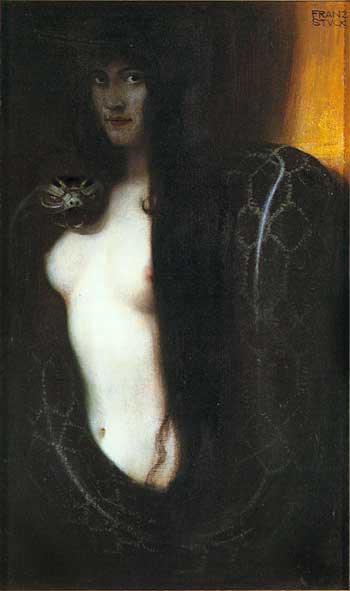 human evolution. Close attention to them, enhanced by dream serpents and the symbols of culture, undoubtedly improves the chances of survival. The nature of the genetic leash and the role of culture can now be better understood, as follows. Certain cultural norms also survive and reproduce better than competing norms, causing culture to evolve in a track parallel to and usually much faster than genetic evolution. The quicker the pace of cultural evolution, the looser the connection between genes and culture, although the connection is never completely broken. Culture allows a rapid adjustment to changes in the environment through finely tuned adaptations invented and transmitted without correspondingly precise genetic prescription. In this respect human beings differ fundamentally from all other animal species. Finally, to complete the example of gene-culture coevolution, the frequency with which dream serpents and serpent symbols inhabit a culture seems ot be adjusted to the abundance of real poisonous snakes in the environment. But owing to the power of fear and fascination given them by the epigenetic rule, they easily acquire additional mythic meaning; they serve in different cultures variously as healers, messengers, demons, and gods. Gene-culture coevolution is a special extension of the more general process of evolution by natural selection. Biologists generally agree that the primary force behind evolution in human beings and all other organisms is natural selection. That is what created Homo sapiens during the five or six million years after the ancestral hominid species split off from a primitive chimpanzeelike stock. (...) In simplest terms, evolution by natural selection proceeds, as the French biologist Jacques Monod once put it (rephrasing Democritus), by chance and necessity. Different forms of the same gene, called alleles, originate by mutations, which are random changes in the long sequences of DNA (deoxyribonucleic acid) that composes the gene. in addition to such point-by-point scrambling of the DNA, new mixes of alleles are created each generation by the recombining processes of sexual reproduction. The alleles that enhance survival and reproduction of the carrier organisms spread through the population, while those that do not, disappear. Chance mutations are the raw material of evolution. Environmental challenge, deciding which mutants and their combinations will survive, is the necessity that molds us further from this protean genetic clay.
Los párrafos anteriores vienen de E. O. Wilson, Consilience (1998: 127-29). Más adelante Wilson habla más de la interacción genes/cultura:
To this point I have traced most of the steps of gene-culture coevolution, circling from genes to culture and back around to genes, as evidence allows. These steps can bue summed up very briefly as follows:
Genes prescribe epigenetic rules, which are the regularities of sensory perception and mental development that animate and channel the acquisition of culture.
Culture helps to determine which of the prescribing genes survive and multiply from one generation to the next.
Successful new genes alter the epigentic rules of populations.
The altered epigenetic rules change the direction and effectiveness of the channels of cultural acquisition.
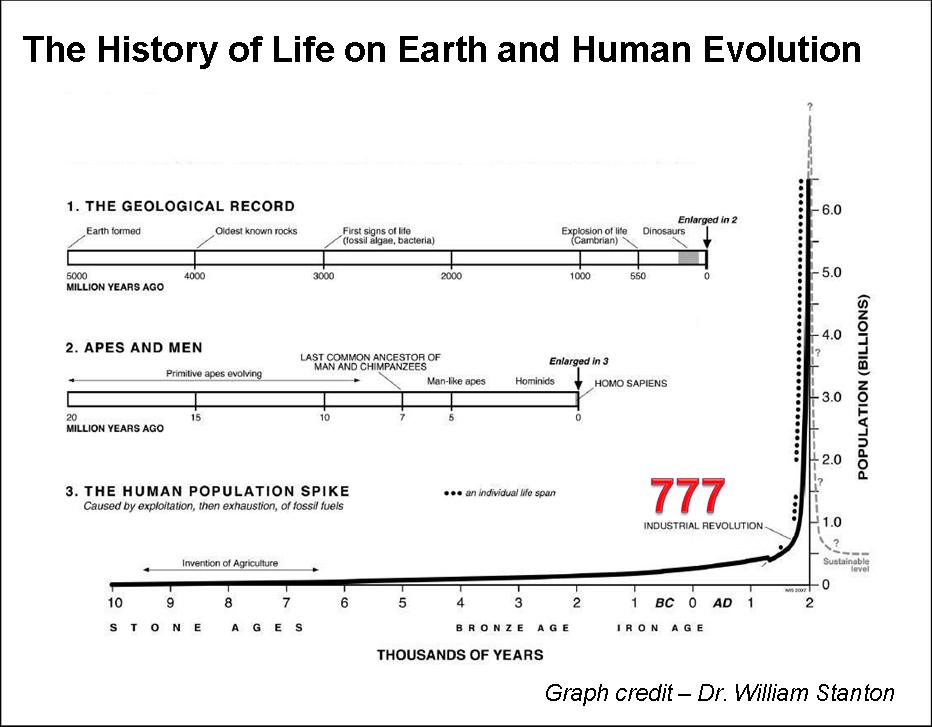
The final step in this series is the most crucial and contentious. It is embodied in the problem of the genetic leash. Throughout prehistory, particularly up to a hundred thousand years ago, by which time the modern Homo sapiens brain had evolved, genetic and cultural evolution were closely coupled. With the advent of Neolithic societies, and especially the rise of civilizations, cultural evolution sprinted ahead at a pace that left genetic evolution standing still by comparison. So, in this last exponential phase, how far apart did the epigenetic rules allow different cultures to diverge? How tight was the genetic leash? That is the key question, and it is possible to bive only a partial answer.
In general, the epigenetic rules are strong enough to be visibly constraining. They have left an indelible stamp on the behavior of people in even the most sophisticated societies. But to a degree that may prove discomfiting to a diehard hereditarian, cultures have dispersed widely in their evolution under the epigenetic rules so far studied. Particular features of culture have sometimes emerged that reduce Darwinian fitness, at least for a time. Culture can indeed run wild for a while, and even destroy the individuals that foster it. (Consilience 157-58).
Un ejemplo de esta base genética de las tendencias culturales lo analiza Wilson con el ejemplo de la prohibición del incesto, extendidísima en todas las culturas como resultado de una tendencia genéticamente implantada: el efecto Westermarck, que limita la atracción sexual entre los individuos de distinto sexo que se han criado juntos. Del carácter socialmente fundacional de la prohibición del incesto hablamos en "Origen de las sociedades"; no es de extrañar que sea una tendencia genética además de las formas que adopte según la convención cultural. Queda en cuestión que la ley social se erija como algo contrario a las leyes biológicas (posición constructivista contra la que arguïamos en nuestra discusión sobre diversos tipos de incesto a no confundir)—más bien la ley social es la continuación de la naturaleza biológica de los seres humanos: de la biología social que les es propia.
En Epic of Evolution, Eric Chaisson también trata esta cuestión de la coevolución genético-cultural al llegar a tratar la última de sus épocas cósmicas, la Época Cultural. En sentido estricto, sólo en los humanos hay cultura, dependiente del lenguaje, artefactos simbólicos, tradiciones, etc. En sentido más amplio, sin embargo, diversas especies animales tienen cultura entendiendo por tal comportamiento que ha de ser aprendido y no es transmitido genéticamente. Los más notables en sus culturas son los chimpancés:
"Because chimps learn so well, behaviorists cannot easily tell how much innate smarts they really have. What part of their intelligence derives from their biological genes and what part from thier cultural environment is simply unknown. We are now in the midst of an ongoing debate concerning the relative importance of the gene and the environment—a debate regarding not only the development of intelligence in chimps. The gene-environment controversy affects all aspects of living beings, especially the cultural evolution of humankind. (Chaisson, Epic of Evolution 392).
Es controvertida, dice Chaisson, el peso relativo de genes y cultura en cuanto a la composición de la inteligencia: qué es heredado, qué es cultural...
The issue of gene (nature) versus environment (nurture) has triggered an emotional debate for the past quarter-century, indeed has forged a whole new interdisciplinary field of research. Sociobiology—the study of the biological basis of social behavior—aims to know the social instincts within any community of life-forms by appealing to the basic principles of psychology, genetics, ecology, and several other seemingly diverse disciplines. A principal goal of this research seeks to identify the inheritable traits that mold societies and secondarily to unravel the degree of importance between competition and cooperation. (Chaisson, Epic of Evolution 392).
La perspectiva sociobiológica viene a modificar sustancialmente la noción de adecuación biológica darwiniana, subrayando el papel de la selección social, o selección de grupo, por encima de la lucha por la vida del individuo como agente genético. La selección natural actúa seleccionando individuos, pero también seleccionando grupos, y a veces es la selección de un grupo sobre otro la que supone que muchos individuos aptos y competitivos en su pequeño ecosistema (su grupo es su principal nicho ecológico) son eliminados porque es el grupo entero el que no encuentra un nicho ecológico adecuado, en su competencia con los demás grupos. La competencia se da a nivel de grupo, no sólo individual, y son los grupos más aptos los que transmiten su genética, y su memética, a la generación subsiguiente.
Esta tensión potencial entre selección del individuo y selección de la sociedad se manifiesta de modo especialmente visible en la cuestión del altruismo: perjudicial en principio para el individuo, el altruismo sin embargo potencia (al menos en potencia) la competitividad del grupo:
"In cultural evolutionary terms, the fitness of an individual is measured not just by her own success and survival but also by the contributions made to the success of her relatives, namely, those who share some of her genes. These contributions are often self-sacrificing ones and can be classified under the general heading of altruism—unselfish devotion to the welfare of others—a fancy word for love. Whereas the catchphrase for classic biological evolution is the oft-stated "survival of the fittest individual," that for sociobiology and cultural evolution would be something like "preservation of an entire society." (Chaisson, Epic of Evolution 392).
Una cuestión central en sociobiología es hasta qué punto el comportamiento (altruista o no) está genéticamente condicionado:
"The main issue is this: To what extent does the human behavior depend on the underlying genes? Which has the dominant influence over the actions of humans, nature or nurture? This is the root of the controversy—human understanding of human affairs." (393).
Dos posiciones distingue Chaisson entre los científicos: todos creen que el entorno es más importante que la genética, pero algunos le atribuyen al entorno toda la influencia, otros reservan a la genética una parte pequeña pero significativa a la hora de crear tendencias y modelar el comportamiento. Los primeros serían los constructivistas radicales. El comportamiento humano, según esa perspectiva, es socialmente construido y la cultura puede modelar ilimitadamente al individuo. (Cuestión que no me parece razonable desde un punto de vista estrictamente sociobiológico).
2The other group contends that genes are of considerable import: genes may contribute only one-tenth in their contest with the environment, but this is enough for many traits (agggression, envy, sympathy, love, fear, intelligence, among others) to be partly predestined in humans. If so, then societal changes in human behavior are limited because much behavior is biologically dictated by the genes. This second school of thought presumes that, for example, the behavior of umans who go hungry to feed their children or the behavior of people who risk their lives to save a drowning swimmer is not the result of free will. Instead, paralleling and insect's desire to preserve its own species at all cost, such behavior is an unconscious reaction built into and dictated by our genes to ensure survival of our own kind—a nepotistic process known as 'kin selection' among interacting individuals who are genetically related. Cooperation then comes to be seen as constly to individuals but potentially beneficial to groups.
Whichever ideas of sociobiology prove valid, it will be important for psychologists and psychiatrists to pay heed. The way people act may be, to some degree, biologically predetermined. Sociologists should also take note, for sociobiology may someday give them quantitative methods by which to test their frequently unsupported assertions. Indeed, economics, law, and politics might eventually become part of the interdisciplinary subject of sociobiology and in turn part of the more inclusive, transdisciplinary worldview of cosmic evolution." (394)
De este modo, la consiliencia entre las disciplinas lleva a una cierta cronologización de las mismas, anclándolas narrativamente en una escala jerárquica que está estructurada temporalmente en la evolución cósmica.
___________
Bien, pues segunda parte. ¿Cómo se conceptualizan las capacidades creativas de la mente humana desde esta perspectiva sociobiológica, que prima la coevolución de cultura y genes? O, por especificar aún más, ¿cuál es la relevancia de la teoría evolucionista cultural para una teoría de la imaginación, del arte y de la literatura? E. O. Wilson trata estas cuestiones en el capítulo sobre "The Arts and Their Interpretation" en Consilience, y sugiere que la capacidad de innovación es un proceso biológico concreto con una base neurológica, de estructuración y adecuación de circuitos cerebrales y neurotransmisores. Es la idea animadora de la biopoética, bioestética, o teoría crítica evolucionista animada por el propio Wilson y Charles Lumsden, que formularon la teoría de la coevolución genético-cultural, así como por Joseph Carroll, Brett Cooke, Ellen Dissanayake, Walter Koch, Robert Storey y Frederick Turner (varios de ellos participaron en el volumen 1 de la Evolutionary Review impulsada por Carroll y ahora dirigida por Alice Andrews). También cita a Irenäus Eibl-Eibesfeldt, etólogo alemán, y a los antropólogos Robin Fox y Lionel Tiger; una panorámica la ofrece Margaret Boden en The Creative Mind. Según Wilson:
"The body of the research to date can be fitted together into the following narrative of coevolution of genes and culture:
- During human evolution there was time enough for natural selection to shape the processes of innovation. For thousands of generations, sufficient for genetic changes in the brain and sensory and endocrine systems, variation among people in thought and behavior caused personal differences in survival and reproductive success.
- The variation was to some degree heritable. Individuals differed then, as they do today, not just in what they learned from their culture but also in their hereditary propensity to learn certain things and to respond by statistical preponderance in particular ways.
- Genetic evolution inevitably ensued. Natural selection, favoring some of the gene ensembles over others, molded the epigenetic rules, which are the inherited regularities of mental development that compose human nature. Among the most ancient epigenetic rules I have described to this point are the Westermarck effect, which inhibits incest, and the natural aversion to snakes. those of more recent origin, perhaps no more than a hundred thousand years ago, include the swift programmed steps by which children acquire language and, we may reasonably presume, some of the creative processes of the arts as well.
- Universals or near-universals emerged in the evolution of culture. Because of differences in strength among the underlying epigenetic rules, certain thoughts and behavior are more effective than others in the emotional responses they cause and the frequency with which they intrude on reverie and creative thought. They bias cultural evolution toward the invention of archetypes, the widely recurring abstractions and core narratives that are dominant themes in the arts. Examples of archetyps I have already mentioned are Oedipean tragedy (violating the Westermarck effect) and the serpent images of myth and religion.
- The arts are innately focused toward certain forms and themes but are otherwise freely constructed. The archetypes spawn legions of metaphors that compose not only a large part of the arts but also of ordinary communication. Metaphors, the consequence of spreading activation of the brain during learning, are the building blocks of creative thought. They connect and synergistically strenthen different spheres of memory. (Wilson, Consilience, 1998: 217-18).
Sobre el último punto, la metáfora y la conectividad cerebral, hablamos aquí en "Training the Train of Ideas." Y del Edipo hablamos aquí a cuenta de Freud—aunque la noción del Edipo de E. O. Wilson es notablemente anti-freudiana. De la nueva perspectiva o paradigma crítico neuro-biológico hablamos en parte al hablar de metáfora y símbolo en "Una sombra, una ficción." Me he acordado de esa conferencia al conectarse en mi mente por conexión espontánea o convergencia lógica largamente trillada la perspectiva antropológico-mítica de la crítica de Joseph Campbell, Northrop Frye, y su teoría de los arquetipos recurrentes en la imaginación humana (quien dice Campbell y Frye dice Jung y demás), con los propios arquetipos surgidos por coevolución genético-cultural según Wilson. Hace una relación abreviada de ellos un poquito más adelante en Consilience—presentándolos como la herencia de nuestra mente paleolítica, todavía activa en un entorno cultural muy transformado:
What can we truly know about the creative powers of the human mind? The explanation of their material basis will be found at the juncture of science and the humanities. The first premise of the scientific contribution is that Homo sapiens is a biological species born of natural selection in a biotically rich environment. Its corollary is that the epigenetic rules affecting the human brain were shaped during genetic evolution by the needs of Paleolithic people in this environment.
The premise and corollary have the following consequence. Culture, rising from the productions of many minds that interlace and reinforce one another over many generations, expands like a growing organism into a universe of seemingly infinite possibility. But not all directions are equally likely. Before the scientific revolution, every culture was sharply circumscribed by the primitive state of that culture's empirical knowledge. The culture evolved under the local influence of climate, water distribution, and food resources. Less obviously, its growth was profondly affected by human nature.
Which brings us back to the arts. The epigenetic rules of human nature bias innovation, learning, and choice. They are gravitational centers that pull the development of mind in certain directions and away from others. Arriving at the centers, artists, composers, and writers over the centuries have built archetypes, the themes most predictably expressed in original works of art.
Although recognizable through their repeated occurrence, archetypes cannot be easily defined by a simple combination of generic traits. They are better understood with examples, collected into groups that share the same prominent features. This method—called definition by specification—works well in elementary biological classification, even when the essential nature of the species as a category remains disputed. In myth and fiction as few as two dozen such subjective groupings cover most of the archetypes usually identified as such. Some of the most frequently cited are the following:
In the beginning, the people are created by gods, or the mating of giants, or the clash of titans; in any case, they begin as special beings at the center of the world.
The tribe emigrates to a promised land (or Arcadia, or the Secret Valley, or the New World).
The tribe meets the forces of evil in a desperate battle for survival; it triumphs against heavy odds.
The hero descends to hell, or is exiled to wilderness, or experiences an iliad in a distant land; he returns in an odyssey against all odds past fearsome obstacles along the way, to complete his destiny.
The world ends in apocalypse, by flood, fire, alien conquerors, or avenging gods; it is restored by a band of heroic survivors.
A source of great power is found in the tree of life, the river of life, philosopher's stone, sacred incantation, forbidden ritual, secret formula.
The nurturing woman is apotheosized as the Great Goddess, the Great Mother, Holy Woman, Divine Queen, Mother Earth, Gaia.
The seer has special knowledge and powers of mind, available to those worthy to receive it; he is the wise old man or woman, the holy man, the magician, the great shaman.
The Virgin has the power of purity, is the vessel of sacred strength, must be protected at all costs, and perhaps surrendered up to propitiate the gods or demonic forces.
Female sexual awakening is bestowed by the unicorn, the gentle beast, the powerful stranger, the magical kiss.
The Trickster disturbs established order and libertates passion as the god of wine, king of the carnival, eternal youth, clown, jester, clever fool.
A monster threatens humanity, appearing as the serpent demon (Satan writhing at the bottom of hell), dragon, gorgon, golem, vampire.
(Wilson, Consilience 223-24).
Quizá sean reconocibles estos arquetipos en esta misma narración, por transformados que estén.